Warm Autumn vs True Autumn: What’s the Actual Difference?

One of the most common points of confusion inside the Autumn family is the difference between True Autumn and Warm Autumn. In many online analyses these two names are used interchangeably, which is why so many people end up wearing palettes that are either slightly too soft or noticeably too heavy for their actual coloring.
In the 12-season system, True Autumn and Warm Autumn are usually treated as one category. In the 16-season system, however, they separate into two distinct subseasons with different value ranges, different contrast thresholds, and different reactions to depth and richness during draping.
This article follows the 16-season approach. If you have ever felt like standard Autumn palettes either overwhelm you or feel too flat, this guide will help you understand which side of the Autumn family you actually belong to.
The Core Difference
Both True Autumn and Warm Autumn belong to the Autumn family. Both are fully warm-toned. Both look overwhelmed by cool blues, icy pastels, and the sharp contrast of Winter. Neither season belongs anywhere near the bright clarity of Spring or the cool muted softness of Summer. But once you move inside the Autumn family, the difference becomes real and visible.
The easiest way to understand the distinction:
True Autumn
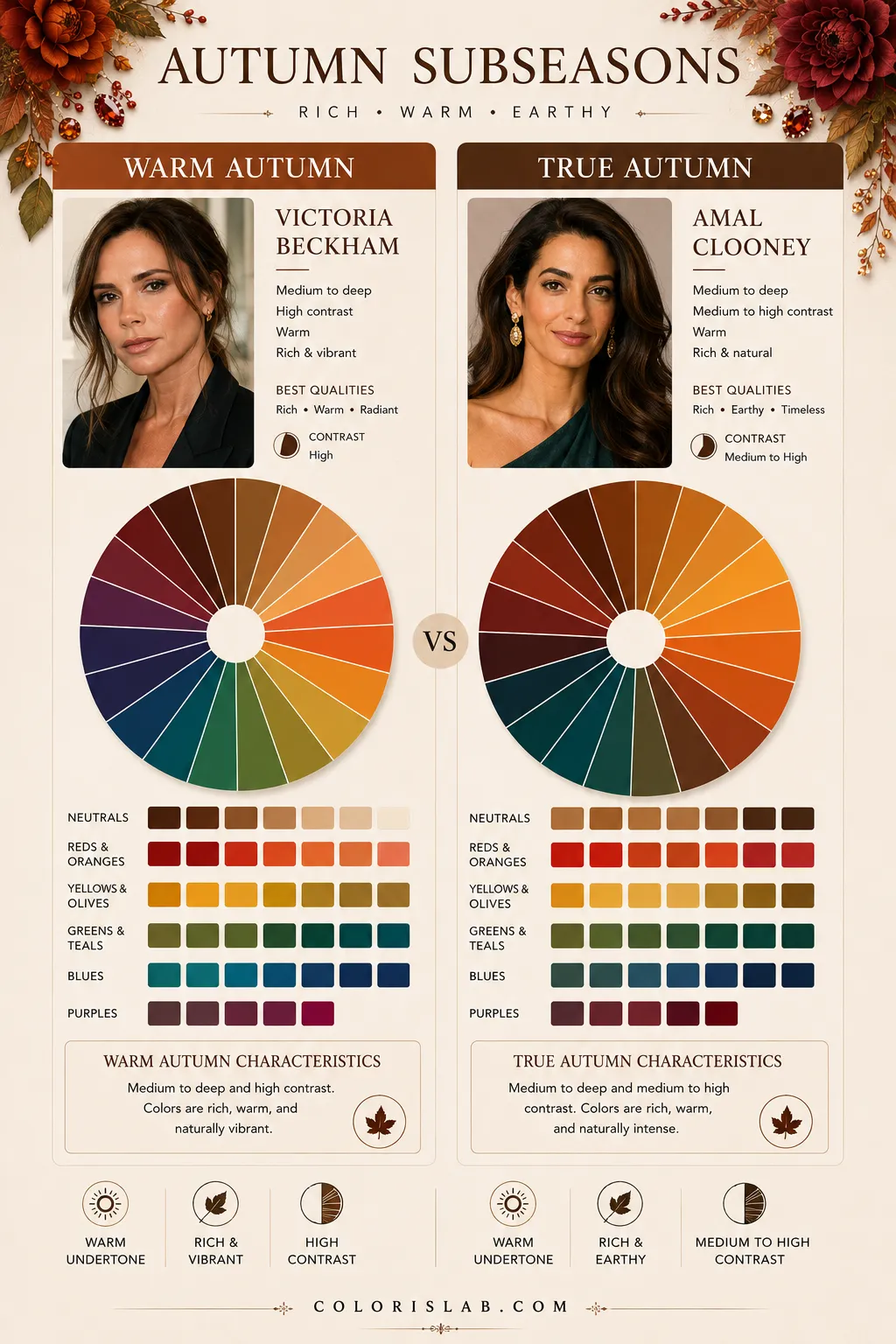
Warm first, soft second. Medium depth. The palette stays balanced and earthy without becoming heavy or overly rich.
Warm Autumn
Warm first, deep second. More richness, more intensity. The palette needs grounded depth to bring the coloring alive.
Many people assume warmth alone determines Autumn placement. In reality, warmth only places you inside the Autumn family. After that, depth, value, contrast, and chroma determine the exact subseason. True Autumn sits closer to the center of Autumn. Warm Autumn moves further into richness and depth. That difference changes everything from clothing colors to makeup intensity to jewelry finishes.
True Autumn: The Balanced Autumn
True Autumn is the most balanced expression of the Autumn family. It sits at the center of Autumn without borrowing the extra depth of Warm Autumn, the added darkness of Deep Autumn, or the neutral-cool blending of Soft Autumn. It is warm, earthy, and grounded without being heavy.
True Autumn coloring appears warm, harmonious, and softly earthy rather than dramatic or heavy. The warmth is obvious, but the coloring does not require extremely dark or highly rich tones to come alive. The overall effect is grounded and balanced.
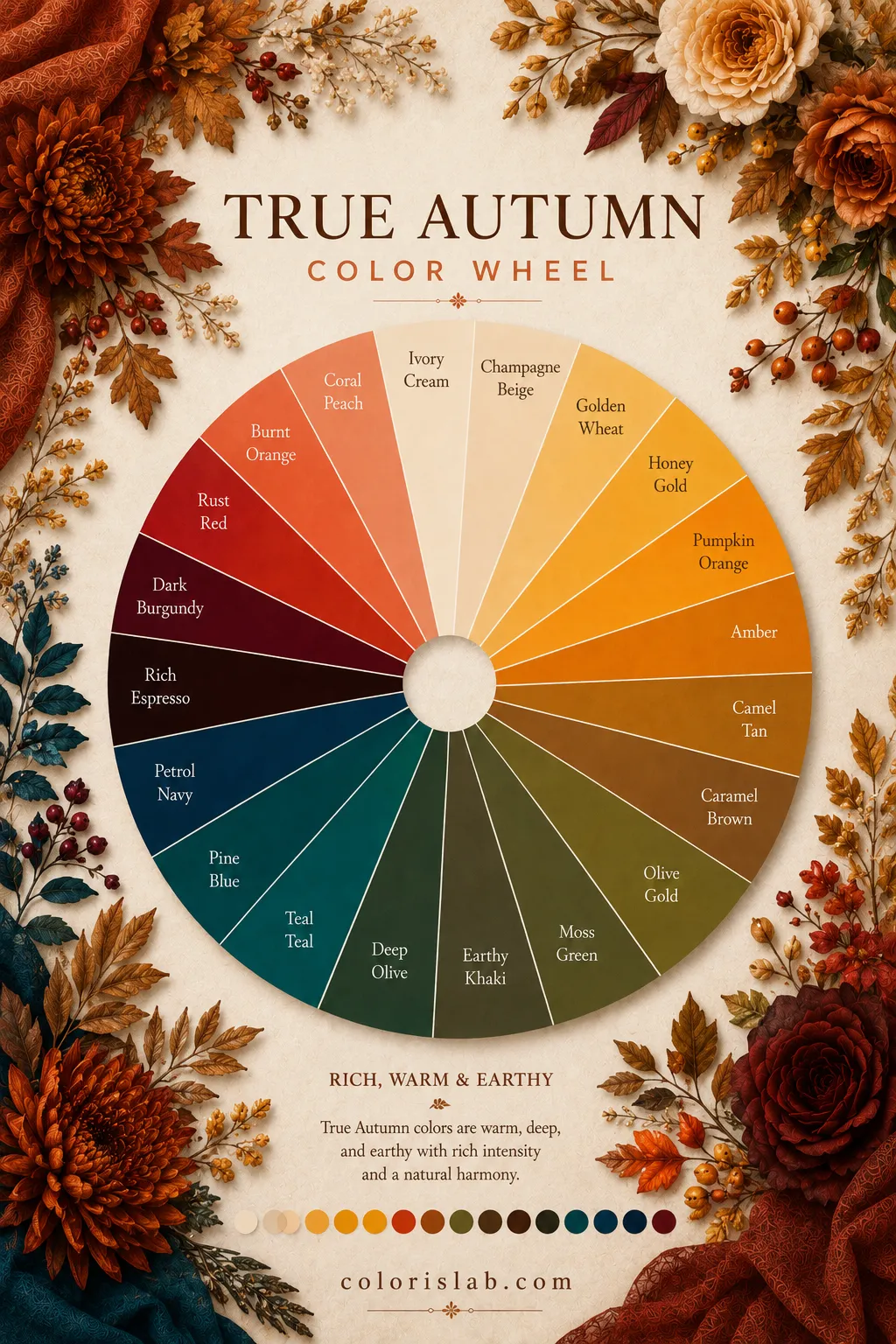
Typical True Autumn colors
Think of soft autumn forests in afternoon light: warm leaves, golden grass, cinnamon, soft moss, clay, muted terracotta. The colors are earthy without becoming overly heavy. Very rich colors that look beautiful on Warm Autumn can quickly overpower True Autumn by adding too much visual weight.
Warm Autumn: The Richest Autumn
Warm Autumn shares the same warm undertone but introduces more depth, stronger contrast, and richer warmth overall. The coloring feels heavier, more saturated, and more intense than True Autumn. The difference is not dramatic in isolation, but side by side it becomes very obvious.
Warm Autumn coloring can handle darker earth tones, stronger warm contrast, and richer textures far more naturally than True Autumn. The coloring glows in shades that would feel slightly overwhelming on a softer Autumn.
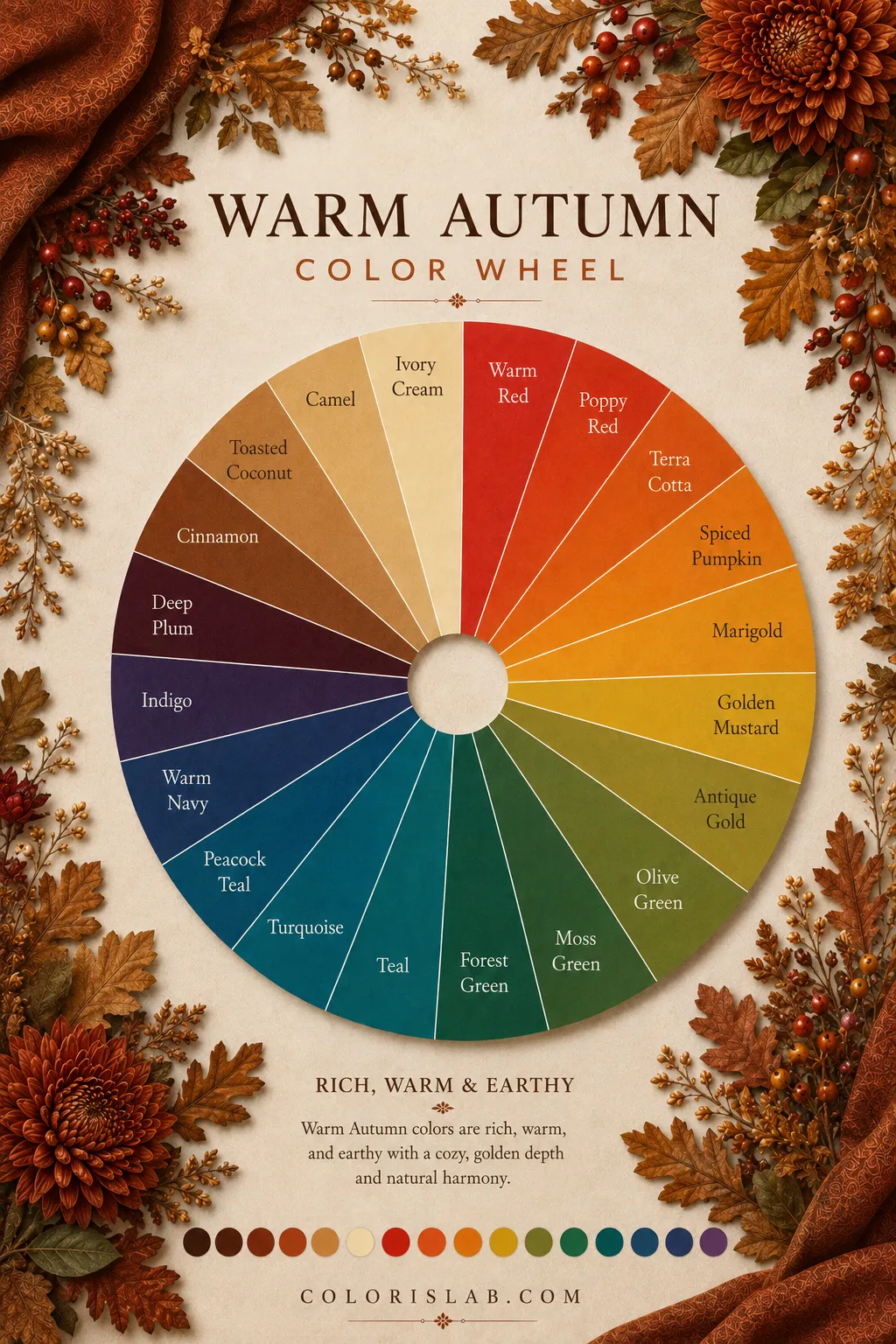
Typical Warm Autumn colors
Think of autumn leaves after rain, dark bark, rich spices, copper metals, mustard fields, deep moss, and burnt orange. Warm Autumn cannot handle coolness at all, but unlike True Autumn it also struggles with colors that are too pale or too delicate. The palette needs richness to support the natural depth of the coloring.
True Autumn vs Warm Autumn in Draping
This is one of the hardest Autumn distinctions because both seasons share the same warm undertone and the same general earthy direction. The separation only becomes obvious when you start testing depth and contrast properly.
Test the difference on your own photo
Drape True Autumn and Warm Autumn palettes side by side and see exactly how your skin responds to each depth level.
Open Virtual Draping Studio →What Works and What Does Not
Colors fail on both seasons mainly when they become too cool. But for True Autumn they also fail when they become too dark or too heavy. For Warm Autumn they also fail when they become too pale or too delicate.
Jewelry and Metals
Both seasons are strongly warm, which means gold always performs better than silver. Silver, platinum, and cool white metals fight against the natural golden undertone in both seasons. However, the finish and intensity matter differently for each.
True Autumn jewelry
Best
- Soft yellow gold
- Brushed gold
- Antique gold
- Rose gold
Avoid
- Silver
- Platinum
- Bright white metals
Warm Autumn jewelry
Best
- Rich yellow gold
- Bronze
- Copper
- Warm rose gold
Avoid
- Silver
- White gold
- Cool platinum
True Autumn jewelry looks best slightly softened rather than extremely polished. Warm Autumn can carry heavier, richer, more textured metals naturally. The difference in finish follows the same logic as the color difference: one needs balance, the other needs richness.
Makeup Differences
This is where the distinction between these two seasons becomes especially visible in daily life. True Autumn makeup should stay warm and earthy but relatively balanced. Warm Autumn makeup can move significantly deeper and richer without looking overdone.
When a True Autumn wears very rich, heavily pigmented Warm Autumn makeup, the look often feels slightly heavy or overdone. When a Warm Autumn wears softer True Autumn makeup, the features can start looking slightly flat or washed out. The goal on both sides is warmth, but the intensity level needs to match the natural depth of the coloring.
Building the Wardrobe
For True Autumn: cream replaces white, camel replaces grey, and warm olive replaces navy. Contrast should stay relatively gentle and blended. For Warm Autumn: wardrobes thrive on richer combinations and heavier textures. Warm Autumn can carry more contrast and depth without losing harmony.
The Biggest Mistyping Problem
One of the biggest mistakes in Autumn analysis is assuming everyone with obvious warmth automatically belongs to Warm Autumn. Warmth alone is not enough. Many people who are actually True Autumn become overwhelmed by very rich Autumn shades.
The opposite also happens regularly. Warm Autumns are frequently mistyped as True Autumn because people focus only on undertone and ignore how much richness the person can naturally carry. The same mistake happens in the other direction too: people comparing themselves to Soft Autumn sometimes assume True Autumn must be significantly richer, when in reality it is still a relatively balanced and soft season.
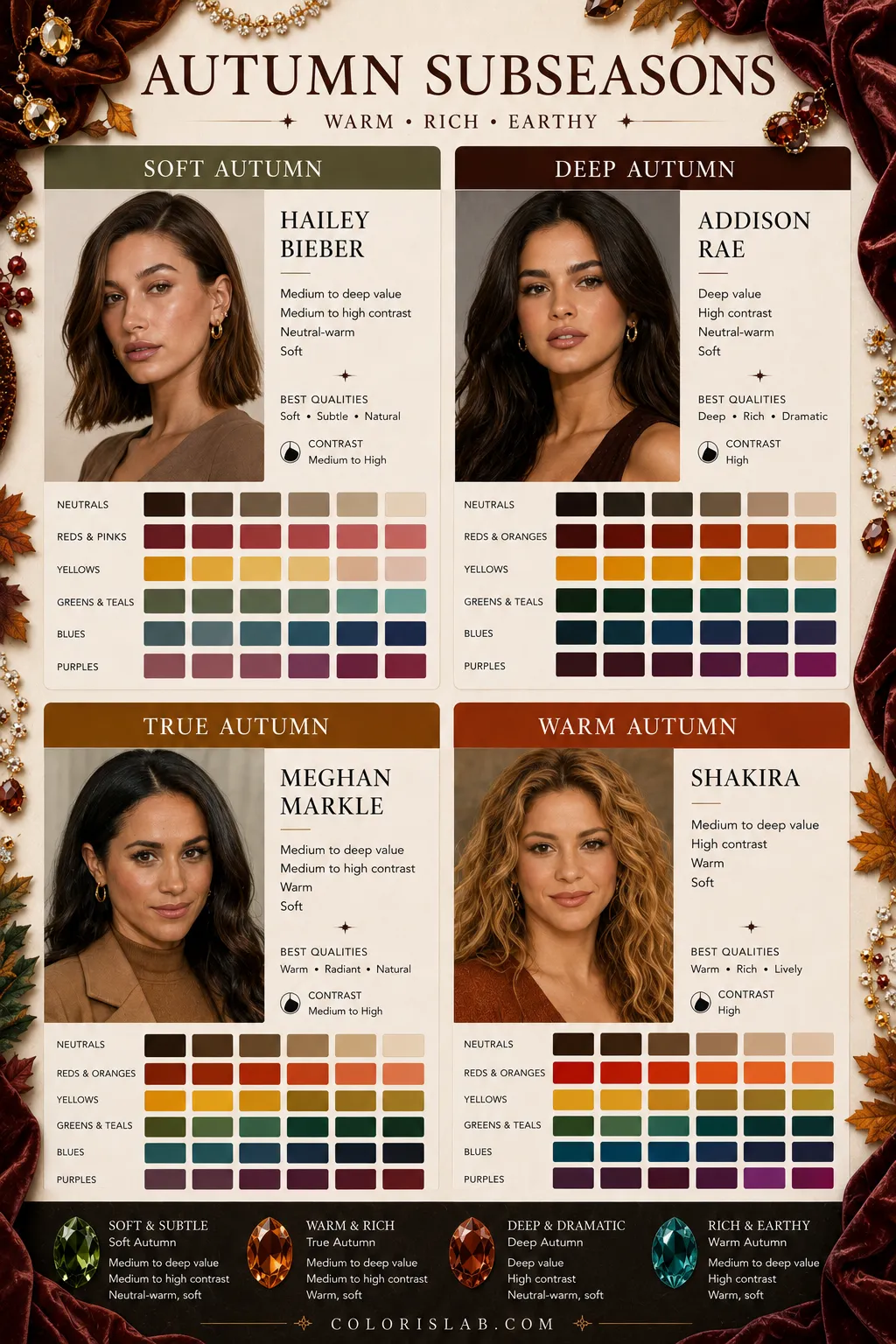
The key question is not: "Are you warm?"
The key question is: "How much depth and richness does your coloring naturally support?" That is what separates these two seasons.
It is also worth noting where these seasons sit within the full Autumn family. Soft Autumn borders Summer and carries a neutral-cool quality that makes it feel muted and smoky rather than richly warm. True Autumn sits fully warm in the center. Warm Autumn moves deeper. And Deep Autumn pushes all the way into dark, near-neutral territory where depth dominates everything else.
Final Comparison
Both seasons are unmistakably Autumn. But True Autumn creates warm earthy harmony, while Warm Autumn creates rich grounded intensity. That difference may sound subtle on paper, but during proper draping it becomes immediately visible the moment depth is tested.
Still unsure if you are a True Autumn or Warm Autumn?
The confusion usually comes from the fact that both seasons are warm and earthy. The real distinction appears in value and richness. Our AI tool analyzes undertone, depth, and chroma direction to help you identify which Autumn palette harmonizes best with your natural coloring.
Try the Free AI Tool →Frequently Asked Questions
What is the difference between True Autumn and Warm Autumn? ↓
Can a True Autumn wear black? ↓
Can Warm Autumn wear brighter colors than True Autumn? ↓
Is Warm Autumn darker than True Autumn? ↓
Can True Autumn wear mustard? ↓
What is the difference between Warm Autumn and Deep Autumn? ↓
Can Warm Autumns have light hair? ↓
Why do cool colors look wrong on Autumn seasons? ↓
Not sure which Autumn season you are? Our AI tool analyzes your photo for undertone, depth, and chroma to give you a clear starting point.
Try the Free AI Analysis →ColorisLab Team
Color Analysis ExpertsWe're a team of color analysis enthusiasts dedicated to helping people discover their best colors and build confidence through personalized color advice.