Autumn Color Analysis: The Complete Guide to Your Warm and Earthy Palette

Autumn is warm and deep. Of the four seasons, it is the one that reads most clearly as rich, grounded and earthy. If you are an Autumn, your coloring has a particular depth and warmth to it that responds immediately to the right colors and just as immediately to the wrong ones. This guide covers everything: your features, your palette, how to build a wardrobe, and how to approach makeup and jewelry from an Autumn starting point.
If you are still working out whether Autumn is your season, the guides on undertone, contrast and chroma will help you get there. The four seasons overview is also a good place to start if you want the broader picture before going deeper into Autumn specifically.
Who is an Autumn?
Autumn is defined by two qualities above everything else: warmth and depth. The undertone is warm, meaning the skin has a golden, bronze or peachy quality rather than a pink or blue one. The value is deep, meaning the overall coloring has a richness and saturation to it that Spring, the other warm season, does not. These two qualities together produce a look that is distinctly grounded, earthy and alive with warmth.
Autumn sits in the warm and deep quadrant of the four season system. It shares warmth with Spring but differs in depth and chroma. Where Spring is lighter and clearer, Autumn is deeper and more muted. The bright coral that works for Spring sits too light and vivid for Autumn. The mustard and terracotta that work for Autumn sit too heavy and earthy for Spring. Both are warm. The depth and saturation differ entirely.
Undertone
Warm: golden, bronze or peachy
Value
Medium to deep, rich and saturated
Chroma
Muted and earthy, not vivid or icy
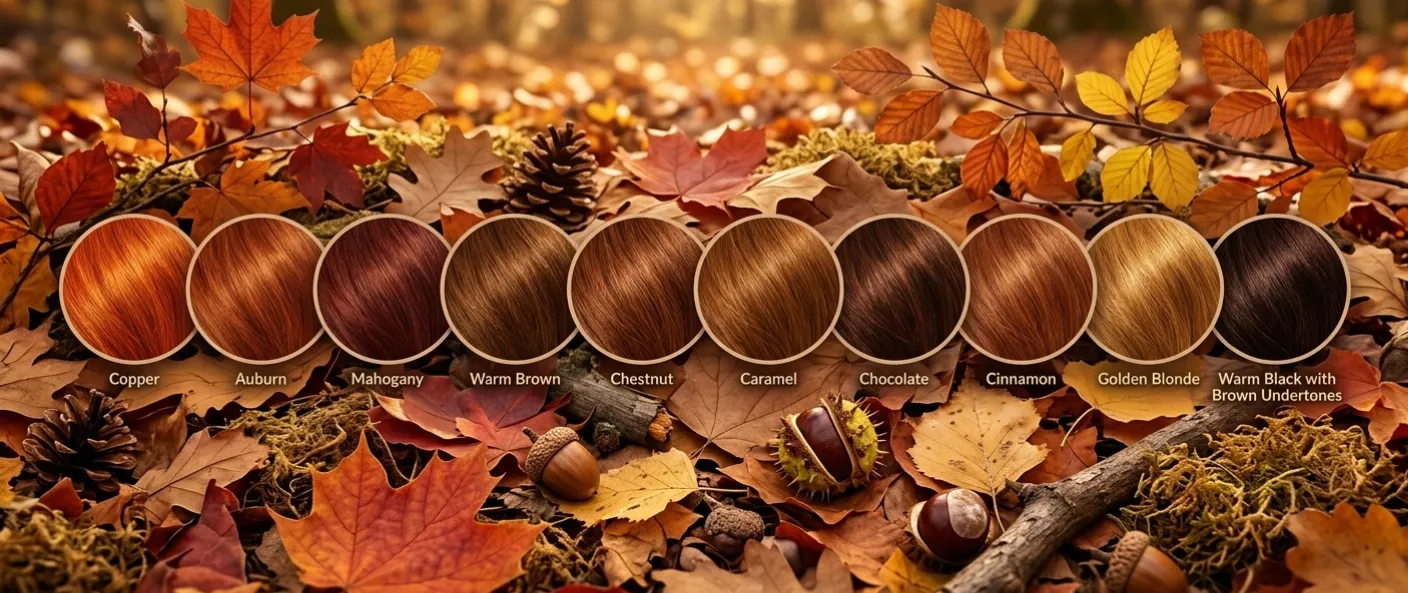
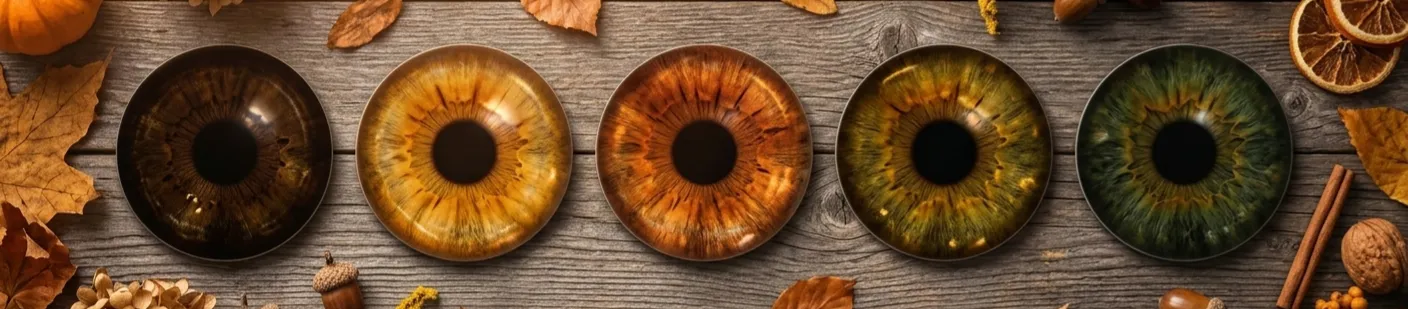
Autumn Features: What to Look For
Not sure if you are an Autumn?
Our free AI tool analyzes your photo and identifies your most likely season, undertone, contrast and chroma in minutes. No quiz, no guesswork.
Try the Free AI Tool →The Autumn Palette
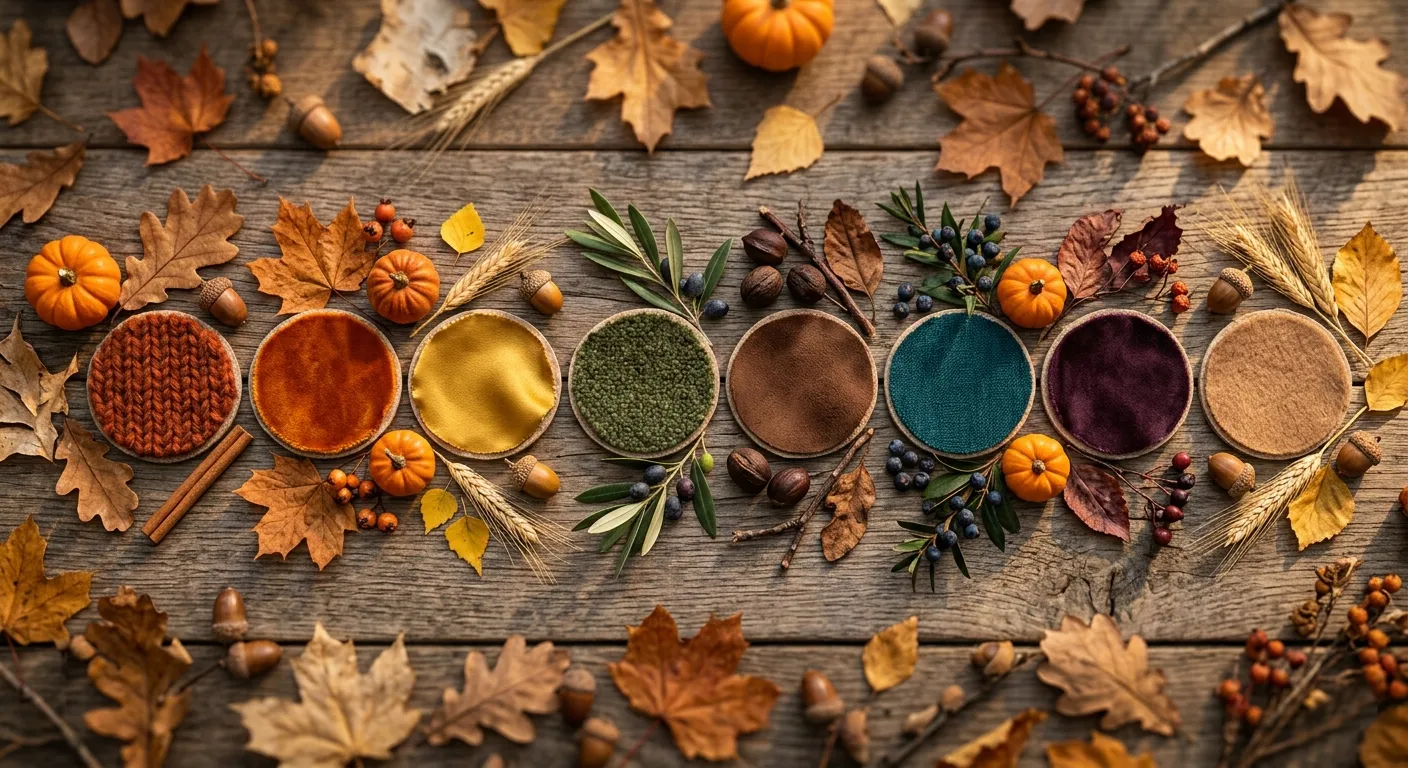
Autumn colors are warm, rich and muted. They draw from the same visual world as Autumn coloring: the colors of turning leaves, harvest spices, forest earth and golden afternoon light. Nothing is icy, electric or cool-toned. Everything has that characteristic warmth and depth that makes Autumn palettes immediately recognizable.

Autumn Palette
Rust, terracotta, pumpkin, burnt orange, mustard, ochre, olive green, moss, forest green, warm brown, chocolate, camel, cinnamon, caramel, teal, warm cream, aubergine
Stark white, jet black, icy cool pastels, cool pinks, electric shades, blue-based reds and anything with a grey or cool quality
The neutrals in the Autumn palette are some of the richest available in any season. Camel, chocolate brown, warm cream, olive and warm greige form a foundation that is both versatile and immediately flattering. These are the colors that make up the best Autumn capsule wardrobe because they work together effortlessly and always read as warm and grounded.
Building an Autumn Wardrobe
Autumn coloring is medium to high in contrast. The depth and richness of Autumn features means the palette can carry saturated, warm colors without them overwhelming the face. Earthy combinations are a particular strength: rust with olive green, mustard with chocolate brown, terracotta with camel. These feel natural and deeply grounded in a way that mirrors the coloring itself.
Texture is an Autumn advantage. Chunky knits, suede, leather, velvet, tweed and corduroy all suit the richness and depth of Autumn coloring in a way they do not suit lighter seasons. Mixing textures within an outfit adds dimension and interest that reinforces the natural depth of the coloring. Organic, earthy prints including leaf patterns, animal prints, paisley and botanical motifs all work particularly well.
- Rust sweater with olive green trousers
- Mustard blouse with chocolate brown jacket
- Camel coat with warm cream knit
- Terracotta dress with gold accessories
- Forest green with caramel leather boots
- Stark white with jet black
- Icy blue with cool grey
- Cool pink with silver accessories
- Baby blue with soft lavender
- Bright fuchsia with cool navy
For fabrics, the best choices for Autumn are those with natural richness and tactility: suede, leather, velvet, corduroy, tweed, wool, cashmere and chunky knits. The goal is clothing that feels warm and substantial, which mirrors the quality of the coloring itself.
Jewelry for Autumn
Jewelry is one of the fastest ways to confirm whether your coloring is warm or cool. Hold a piece of yellow gold against your face in natural light, then hold a piece of silver. For Autumn, the gold integrates immediately and looks as though it belongs there. The silver creates a visible disconnection, sitting on the skin rather than merging with it.
Best metals
Yellow gold, bronze and copper are the strongest choices. They harmonize completely with the warm undertone and enhance the natural golden depth of Autumn coloring. Rose gold also works well.
Metals to avoid
Cool silver and platinum introduce a coldness that works against the warm undertone. Against Autumn skin they tend to look disconnected and can make the complexion read as slightly dull or sallow.
For gemstones, the best choices are warm and earthy: amber, citrine, topaz, garnet, peridot, tiger's eye, turquoise and moss agate. These carry the same warm earthiness that Autumn coloring has and sit naturally against the skin as though they were made for it.
Autumn Makeup
Autumn makeup should enhance the natural warmth and depth of the coloring rather than working against it. The goal is a warm, glowing and grounded result rather than a cool or overly polished one. Every product choice follows the same principle as the wardrobe: warm, muted and rich in depth.
Foundation
Look for foundations with a warm, golden or yellow undertone. Shade descriptors like warm, golden, sand or beige are reliable indicators. Avoid anything with a pink or neutral grey base, which will sit on top of warm skin rather than integrating with it.
Blush
Peach, apricot, terracotta, warm bronze and soft coral all work well. Applied to the cheeks they create a sun-kissed, healthy flush that reads as natural. Cool pinks and berry tones conflict with the warm undertone and can make the skin look slightly off.
Eyeshadow
Warm neutrals are the everyday base: bronze, copper, gold, terracotta, warm brown, olive and moss green. These all have the earthy warmth that enhances Autumn eyes particularly well. For more depth, teal or a warm plum on the lid adds dimension without conflicting with the undertone.
Lips
Terracotta, brick red, warm brown, caramel, cinnamon, deep peach and russet are all strong choices. A satin or creamy finish suits the natural richness of Autumn coloring. Cool pinks, blue-based reds and bright berry tones all work against the undertone.
Common Autumn Misconceptions
All Autumns are redheads
Autumn coloring includes warm brunettes, golden blondes and even deep warm skin tones with dark hair. The defining quality is warmth, not hair color. A Deep Autumn with very dark warm brown hair and golden skin is just as much an Autumn as a copper-haired freckled type.
Autumns can only wear dark earthy tones
The Autumn palette includes lighter warm tones like camel, peach, warm cream and golden yellow that work beautifully for warmer months and more casual settings. The key quality is not depth but warmth. Even lighter Autumn colors have that characteristic golden quality.
All earth tones work for Autumn
Only warm earth tones work. Cool earth tones like grey taupe with a pink undertone, cool-toned khaki or slate blue will not produce the same harmonious result. The warmth of the earth tone is what matters, not just whether it reads as natural or neutral.
Autumn and Spring are interchangeable because both are warm
Both seasons share a warm undertone but differ significantly in value and chroma. Autumn is deeper and more muted. Spring is lighter and clearer. Mustard and terracotta work for Autumn but sit too heavily on Spring. Bright coral and fresh turquoise work for Spring but read as too light and vivid for Autumn.
See your Autumn palette in action
Cycle through warm and earthy palettes on your own photo and watch how your skin responds to each one. The same method a professional uses, free for everyone.
Open Virtual Draping Studio →Frequently Asked Questions About Autumn
What makes someone an Autumn in color analysis? ↓
Can an Autumn wear black? ↓
What is the difference between Autumn and Spring? ↓
Can an Autumn have fair skin? ↓
What are the Autumn subtypes in the 12 season system? ↓
Why do cool colors make Autumn skin look off? ↓
The Autumn Subtypes
In the 12 season system, Autumn divides into three subtypes. All three are warm, but they differ in which secondary quality shapes the palette most. If the Autumn palette above feels broadly right but something is slightly off in one direction, one of the subtypes is likely a closer fit.
ColorisLab Team
Color Analysis ExpertsWe're a team of color analysis enthusiasts dedicated to helping people discover their best colors and build confidence through personalized color advice.