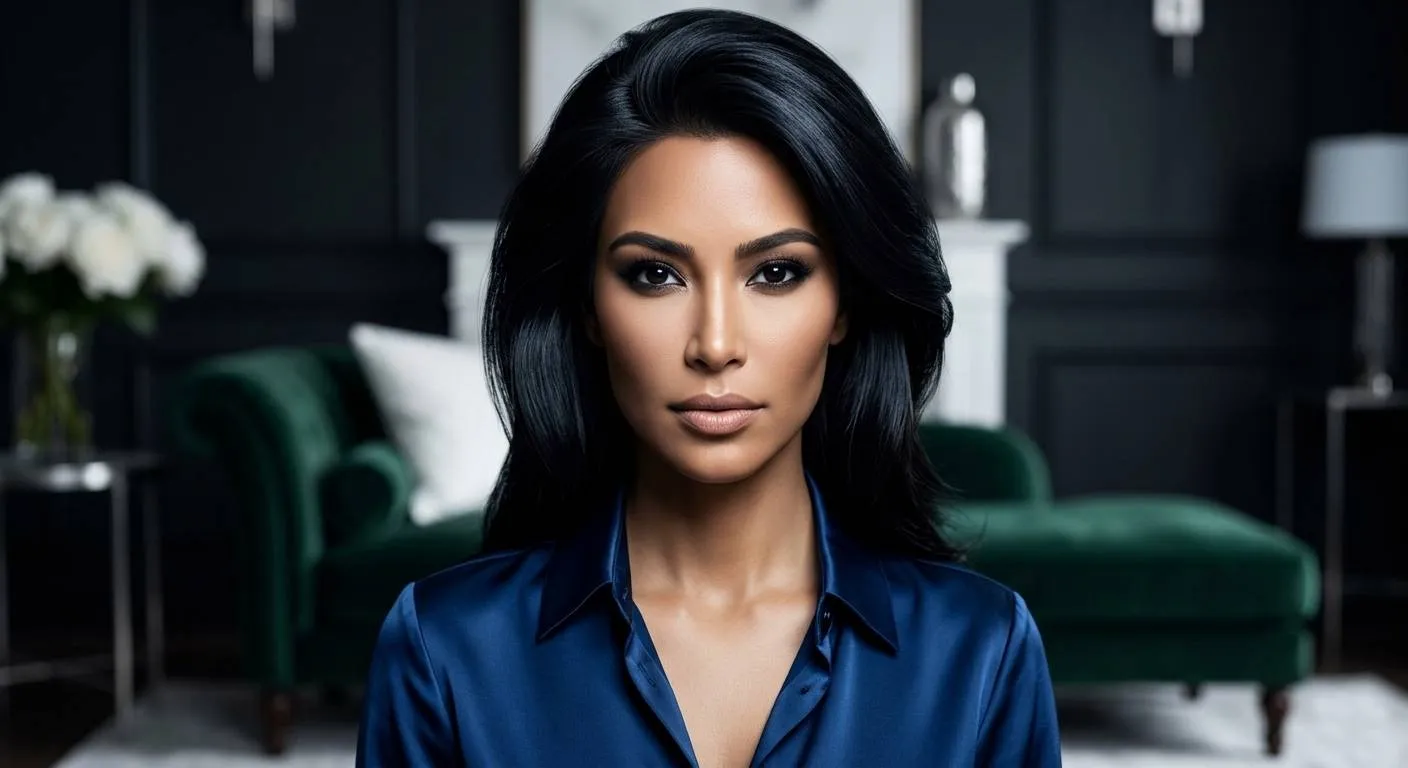
Deep Winter Overview
Value
Deep
Contrast
High
Undertone
Neutral-cool
Chroma
Bright
Sister season
Deep Autumn
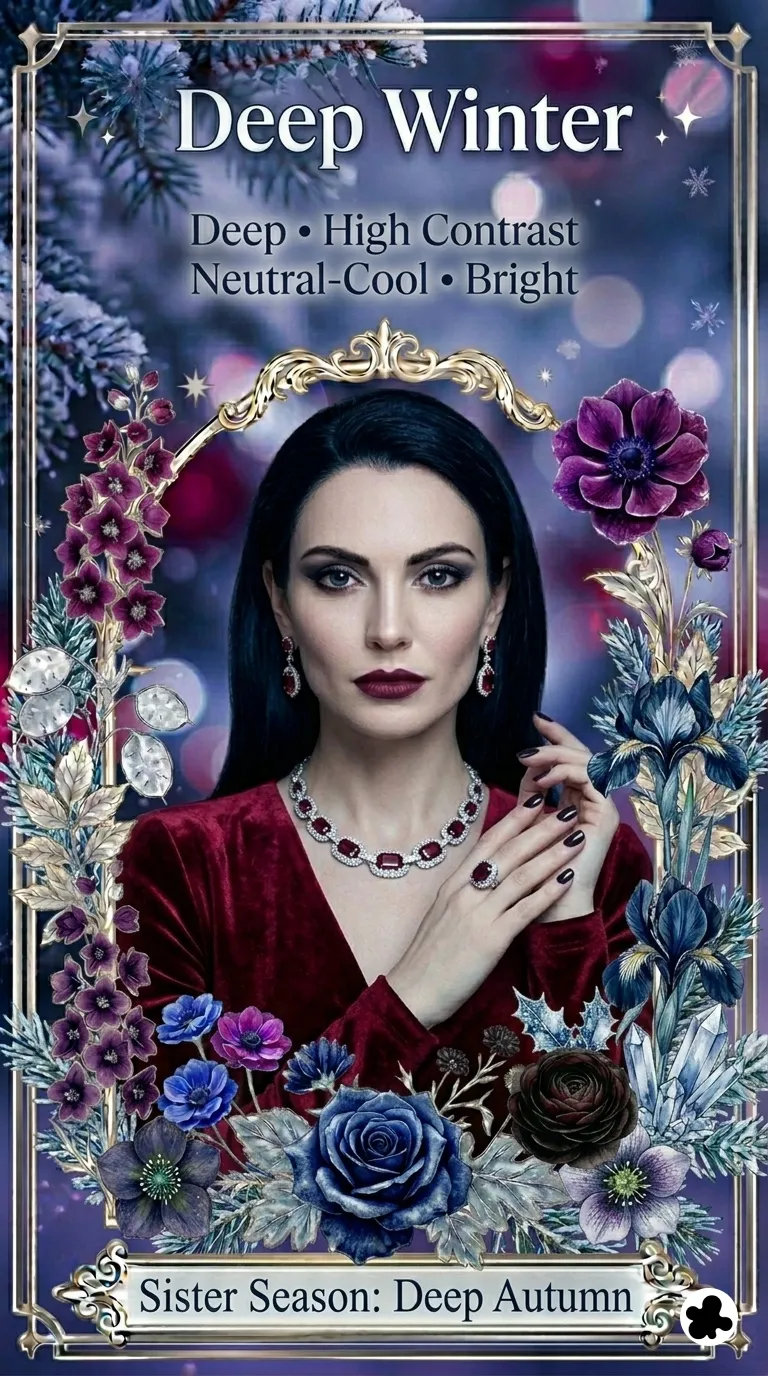
Deep Winter or Dark Winter is the sub-season at the furthest edge of the Winter family from its cool, icy center. The coolness is still present and still defining, but it has been deepened and intensified until it sits right against the border of the Autumn family. Of the three Winter sub-seasons, Deep Winter is the one closest to the warm, earthy Autumn family, and that border shapes its palette in ways that distinguish it from the other two.
The dominant characteristic is depth in value. Before anything else, Deep Winter coloring reads as dark and striking. The secondary characteristic is coolness, which keeps the palette on the cool side of neutral and separates it from its nearest neighbor, Deep Autumn. Together they produce the deepest palette in the entire Winter family.
The border with Deep Autumn is the most important identification challenge this season presents. Both are dark. Both have intensity and presence. The single dimension that separates them is temperature, which is clearly visible in draping even when features alone look ambiguous. Read the 12 seasons guide if you want to understand how border seasons work before going further.
Deep Winter
Winter family · Borders Autumn
Secondary
Neutral Cool (Temperature)
Metals
Silver, white gold
🌿
Deep Winter Coloring: What to Look For
The overall impression of Deep Winter coloring is dark, striking, and cool. Skin has depth with a cool or neutral-cool undertone. Hair is dark and carries no warm quality. Eyes are deep, dark, and often have an intense, penetrating quality. There is medium to high contrast between features. When you look at someone who is a Deep Winter, the first words that come to mind are usually striking, dramatic, or intense. The beauty is commanding and cool rather than warm or soft.
🧴
Skin
Deep Winter skin ranges from medium to very deep in value. The undertone is cool or neutral-cool: pink, blue-pink, olive with a grey or blue cast, or a neutral with no warm quality. In darker skin tones this can manifest as a cool ebony, blue-black, or cool deep brown. The depth of the coloring can sometimes make the cool undertone less immediately obvious, which is the main reason Deep Winter is sometimes confused with Deep Autumn. In natural light, the skin has a cool, clear quality rather than a golden or peachy glow.
Fair cool pink
Medium cool olive
Deep cool brown
Cool deep ebony
💇
Hair
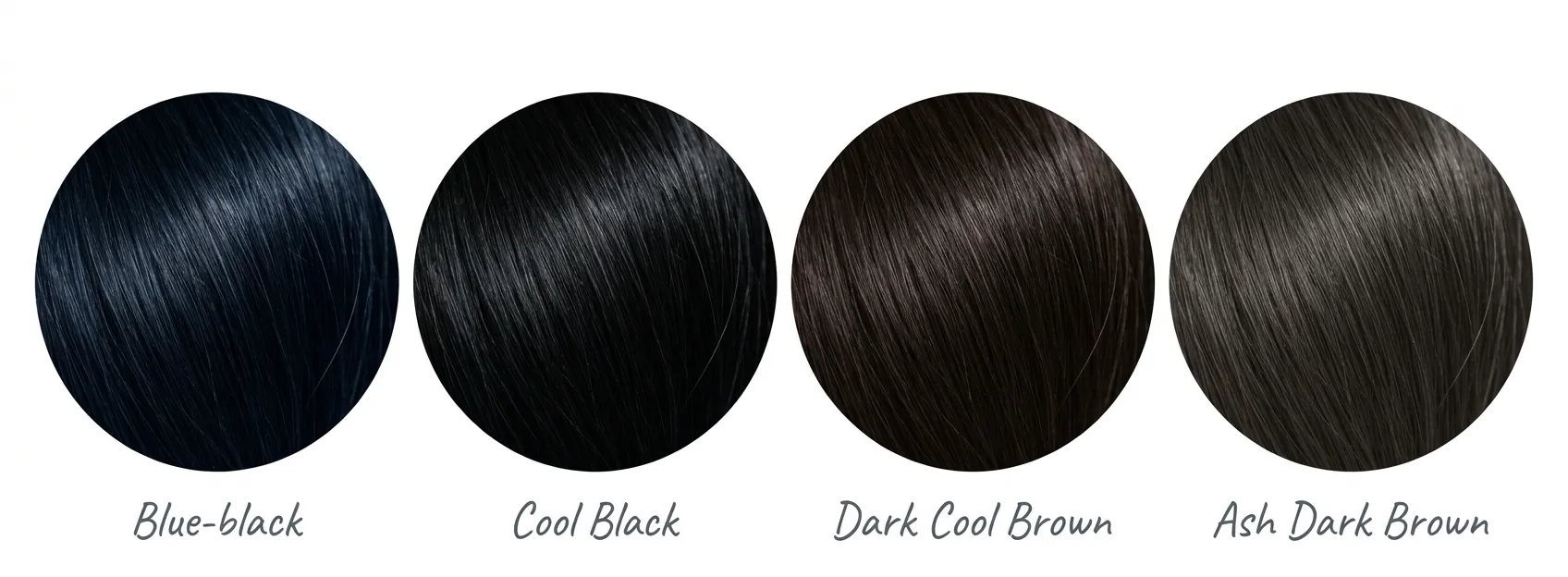
Deep Winter hair is dark and carries no warm quality. Black hair in this season has a cool, blue-black or neutral-black quality rather than any brown or golden cast. Dark brown hair is cool and ash-toned, never warm chestnut or golden. In sunlight there are no copper or golden highlights, only a cool sheen. Blonde or red hair is not characteristic of Deep Winter at its center. When hair lightens naturally with age it tends toward cool grey or cool silver rather than the warm grey or golden tones seen in Autumn seasons.
Blue-black
Cool black
Dark cool brown
Ash dark brown
👁️
Eyes
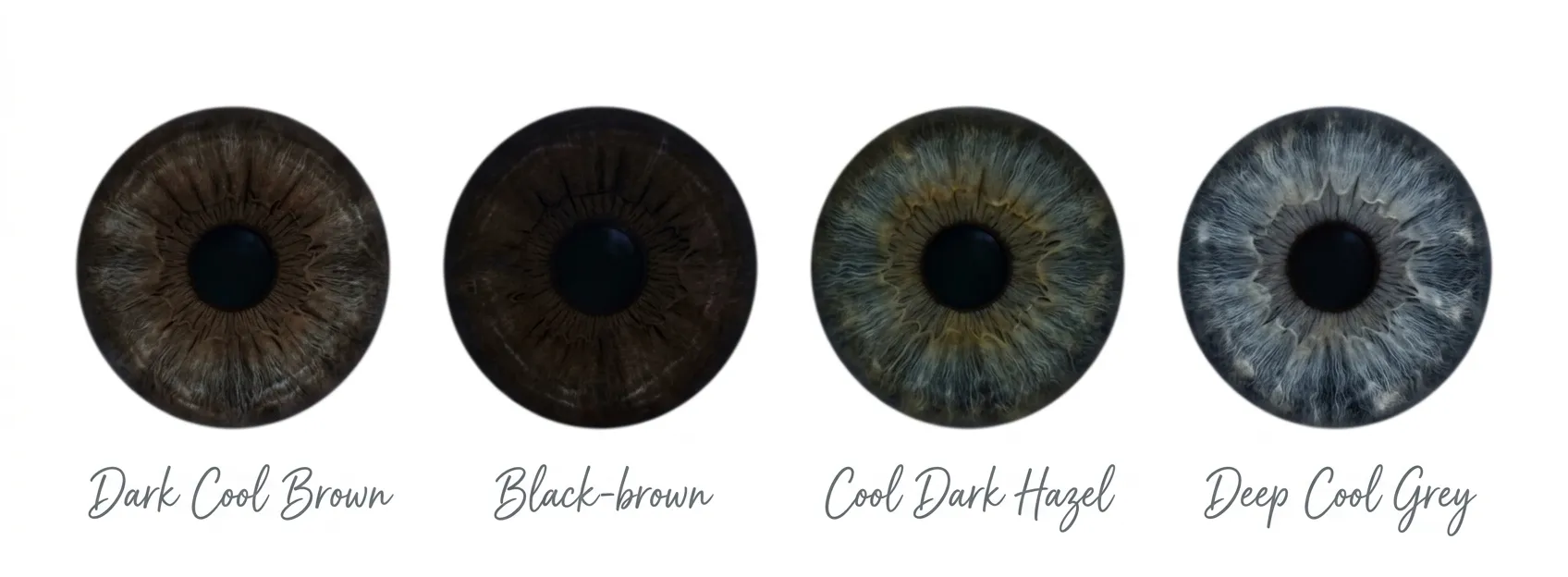
Deep Winter eyes are dark, cool, and intensely penetrating. Dark brown eyes are very common and have a cool, near-black depth with no visible golden or amber warmth. Black-brown eyes appear in this season more than in any other. Cool dark hazel with grey-green or grey-brown tones can appear. Deep cool grey or very dark blue eyes are less common but possible. The eyes are one of the most defining features of Deep Winter: they have an intensity and sharpness that is immediately striking, and they look most alive against dark, cool colors rather than warm or muted ones.
Dark cool brown
Black-brown
Cool dark hazel
Deep cool grey
🎨
The Deep Winter Color Palette
Deep Winter colors share two qualities above all others: they are dark and cool. Every color in the palette has been deepened until it sits at the richest, most intense end of the cool range. Think of a winter forest at midnight, deep ocean water, polished onyx, and cool dark earth. This is the deepest palette in the Winter family, deeper than Cool Winter and deeper than Clear Winter, and it sits closer to the Autumn palette than any other Winter sub-season.
The palette is deep in value. Very light or icy colors lack the weight and depth the coloring needs and will look disconnected against it. Chroma is medium to high, which gives the palette its striking intensity. Because this season borders Deep Autumn, it can borrow the warmest and deepest tones from that palette, but only when they lean cool rather than clearly warm.
✓ Colors that work
True black
Cool navy
Charcoal
Cool burgundy
Deep plum
Forest teal
Deep cool green
True red (cool)
Cool dark brown
Deep cool grey
Aubergine (cool)
Ivory or cool white
✗ Colors that don't work
Warm brown
Rust or terracotta
Mustard or olive
Camel or tan
Warm orange
Golden yellow
Warm burgundy
Icy pastels
Soft muted tones
Cream or ecru
Warm red
Peach or apricot
Colors fail on Deep Winter in two clear ways. Warm colors conflict with the cool undertone regardless of their depth, making the skin look sallow, grey, or simply mismatched. Light or pastel colors, even cool ones, lack the depth the coloring needs and create a washed-out impression, as if the face has disappeared into the clothing. The palette needs both coolness and depth simultaneously. A color with only one of the two will fall short. When in doubt, hold the fabric up to your face in natural light: if the skin looks sharp, clear, and alive, the color is right.
A note on black and white
True black is one of the best neutrals for Deep Winter, which distinguishes this season from every Autumn sub-season and most Spring sub-seasons. The depth and coolness of the coloring can carry black near the face without the hardness or temperature conflict that other seasons experience. Bright, cool white also works at the lighter end, though ivory or off-white is more forgiving. This black-and-white combination, which looks harsh on most seasons, is genuinely natural and powerful on Deep Winter.
Silver is the natural metal for Deep Winter, and the test is immediate: gold sits visibly warm and separate against the skin, while silver integrates with the cool undertone and looks as if it belongs there. Platinum and white gold work equally well. Because the depth of Deep Winter coloring is high, this season can carry bolder, more dramatic silver pieces without them looking overwhelming. Large-scale silver, highly polished finishes, and geometric or architectural designs all suit the season's commanding character.
Silver
Platinum
White gold
Polished steel
Yellow gold
Bronze
Copper
For gemstones, deep and cool options suit this season best: deep sapphire, amethyst, garnet (in its cool red rather than warm auburn form), black onyx, dark tourmaline, and cool deep emerald. White diamonds and clear crystal set in silver or platinum are among the most elegant choices. Warm stones like amber, citrine, tiger's eye, and carnelian are the wrong temperature entirely and will read as disconnected from the coloring no matter how beautiful they are in isolation.
Deep Winter makeup should enhance the natural drama and coolness of the coloring. The palette can carry more definition, depth, and contrast than almost any other season because the coloring itself has the intensity to support it. Warm-toned pigments, golden or bronze products, and earthy tones all work against this season. The best Deep Winter makeup looks cool, precise, and deliberately dramatic: skin that is clear and even, eyes that are defined and intense, lips that are rich and cool-toned.
Cool or neutral-cool undertoned formulas matched precisely to the skin's depth. Descriptors like cool, neutral, pink, or beige with a cool qualifier are reliable guides. For deeper skin tones, look for neutral or cool brown and cool cocoa formulas. Avoid anything with a golden, yellow, or peachy undertone. A satin or natural finish works best, giving the skin a clean, clear quality rather than a warm glow.
cool beige
neutral tan
cool cocoa
Cool berry, deep rose, cool plum, and cool cranberry. Deep Winter can carry more intensity in blush than lighter seasons because the coloring has the contrast to absorb it. Avoid warm pinks, peach, terracotta, apricot, and any blush with a warm or orange undertone. For deeper skin tones, cool deep berry and plum tones work exceptionally well. The goal is a cool, defined flush rather than a warm, sun-kissed glow.
cool berry
deep rose
cool plum
Cool and deep: charcoal, cool black, deep navy, cool plum, dark teal, and cool grey. Deep Winter is one of the very few seasons that can wear a true black smoky eye near the face without it looking harsh, because the depth and coolness of the coloring matches the intensity of the color. Liner in cool black or dark navy. Silver or gunmetal shimmer as a highlight adds cool drama without introducing warmth.
charcoal black
deep navy
cool plum
True red, cool berry, cool burgundy, deep plum, cool cranberry, and cool dark rose. Deep Winter is the season most naturally associated with a classic true red lip, which looks definitive and powerful rather than costume-like. Cool nude lips, while tempting for daytime, tend to wash out the face; a cool rose or berry is a more flattering minimal option. Avoid warm reds, brick tones, terracotta, caramel, and anything with a brown or orange base.
true red
cool burgundy
deep plum
⚖️
Deep Winter vs. Neighboring Seasons
Deep Winter is most commonly confused with two seasons: Deep Autumn and Cool Winter. The Deep Autumn confusion is about temperature: both are dark but one is warm and one is cool. The Cool Winter confusion is about depth: both are cool but one is deeper and one is more purely cool without the border warmth.
Cool and deep. Colors have cool undertones: cool navy with a blue quality, true burgundy, charcoal, cool black. Silver harmonizes with the skin. Cool tones make the skin look clear, sharp, and dramatic.
Warm and deep. Colors have warm undertones: warm navy with a green or teal quality, warm burgundy, chocolate brown. Gold harmonizes with the skin. Warm tones make the skin glow and look earthy and alive.
The test: Hold a cool navy (with a blue undertone) and a warm navy (with a green or teal undertone) up in turn. Whichever makes the skin look clearer and more alive tells you which season you are. Cool navy for Deep Winter; warm navy for Deep Autumn. Gold versus silver produces the same result.
Depth dominates. Cool colors need to be dark and rich to look most natural. Very cool, icy tones can feel slightly light or airy against the intensity of the coloring. The palette needs both depth and coolness together to come alive.
Coolness dominates. The palette runs the full cool range from icy to deep. Very dark, heavy colors can feel slightly overpowering. The palette is most alive in the clear, cool range rather than specifically at the darkest end.
The test: Try a very dark charcoal and a medium cool grey side by side. If the deep charcoal looks rich and commanding and the medium grey feels slightly light or washed out, you are Deep Winter. If the medium cool grey looks clean and natural and the charcoal feels slightly heavy, you lean Cool Winter.
👗
Building a Deep Winter Wardrobe
A Deep Winter wardrobe is built around dark, cool, commanding presence. Every piece should feel as if it belongs to the same world: deep, precise, and dramatically cool. The result is a wardrobe that looks effortlessly powerful in a way that warm, light, or muted palettes cannot replicate for this coloring.
True black is the cornerstone neutral for Deep Winter and one of the very few seasons that can carry it near the face without any visual penalty. Charcoal, cool dark navy, and cool dark grey complete the dark neutral range. At the lighter end, cool white and ivory provide sharp contrast rather than warmth. This black and white foundation is not only acceptable for Deep Winter, it is one of the most naturally powerful combinations available to this season, producing the clean, high-contrast look that suits the coloring best.
True black
Charcoal
Cool dark navy
Cool white
The deepest, most intense cool tones: cool burgundy, deep plum, forest teal, cool deep green, true red, and deep sapphire. These colors do something immediate and visible when worn near Deep Winter coloring: the skin takes on a clear, luminous quality, the eyes sharpen in intensity, and the overall impression becomes striking and authoritative. Cool burgundy and deep teal are particularly powerful signature colors, as they sit at the exact intersection of depth and cool temperature that defines this season.
Cool burgundy
Deep plum
Forest teal
True red
Deep sapphire
3
Contrast, Prints, and Texture
Deep Winter has medium to high natural contrast, which means it can handle bold combinations within the cool dark palette. Black with cool white, deep navy with cool ivory, charcoal with deep teal: these pairings have genuine presence and authority. High contrast within the cool palette is more natural here than tonal dressing, though all-dark cool combinations also work. For prints, bold and graphic patterns suit this season: geometric designs, strong contrast patterns, large-scale cool-toned botanicals, and abstract prints in deep cool colors. Delicate or pastel-based prints are too light and soft. Fabrics can range from matte to high-shine: satin and silk in deep cool colors can be spectacular for evening, and the polish of high-shine fabrics complements the sharp, precise character of the coloring in a way that is less suited to warmer, earthier seasons.
🤖
Still unsure if you're a Deep Winter?
The most common confusion is the border with Deep Autumn, where both seasons are dark but temperature separates them entirely. Our AI tool analyzes your photo for undertone direction and gives you a starting point before you test cool navy versus warm navy in person.
Try the Free AI Tool →
❓
Frequently Asked Questions
Is Deep Winter the same as Dark Winter?
↓
Yes. Deep Winter and Dark Winter are two names for the same sub-season. Deep Winter is the more widely used term in the 12-season system, while Dark Winter appears in some other frameworks. The dominant characteristic (depth), secondary characteristic (coolness), and palette are identical under both names.
Can a Deep Winter wear warm colors?
↓
Warm colors consistently conflict with Deep Winter's cool undertone, regardless of how dark or rich they are. Rust, mustard, camel, terracotta, and warm brown will all introduce a temperature that sits at odds with the coloring. Because this season borders
Deep Autumn, it can access the neutralest, deepest tones from that palette — a near-neutral very dark brown or a very deep teal with both warm and cool qualities — but the further a color moves toward clearly warm, the more clearly it fails.
Can a Deep Winter have warm-looking features?
↓
It is possible for individual features to read as warm or neutral under certain lighting conditions, particularly medium brown eyes or dark brown hair in incandescent or warm artificial light. Color analysis reads the underlying undertone of the skin rather than the surface appearance of individual features in isolation. Draping in natural light near the face remains the reliable reference: if silver consistently harmonizes with the skin and gold introduces a slight warmth or separation, the cool undertone is real regardless of how any single feature reads on its own.
Can a Deep Winter have lighter skin or hair?
↓
Deep Winter most commonly presents with dark hair and medium to deep skin, but the season is defined by the depth and coolness of the overall coloring pattern rather than any single feature. A person with medium skin and very dark cool eyes and hair can be Deep Winter. What is not characteristic is a light, airy overall impression or warm features: the combination of dark cool elements across the coloring as a whole is what defines the season. When skin is lighter but hair and eyes are dark and cool, the overall depth of the coloring pattern can still place someone in Deep Winter.
How does Deep Winter differ from Cool Winter in makeup?
↓
Both seasons use cool-toned makeup, but depth is the key difference. Deep Winter can carry darker, more intense versions of cool makeup: deeper burgundy lips, darker smoky eyes, more defined and dramatic blush.
Cool Winter works best in the clear, cool mid-range: a medium cool berry lip looks natural, while a very deep burgundy can feel heavy for that season. Deep Winter has the depth to absorb that darkness without it becoming overwhelming; in fact, it is precisely that depth and intensity that makes the look commanding rather than heavy.