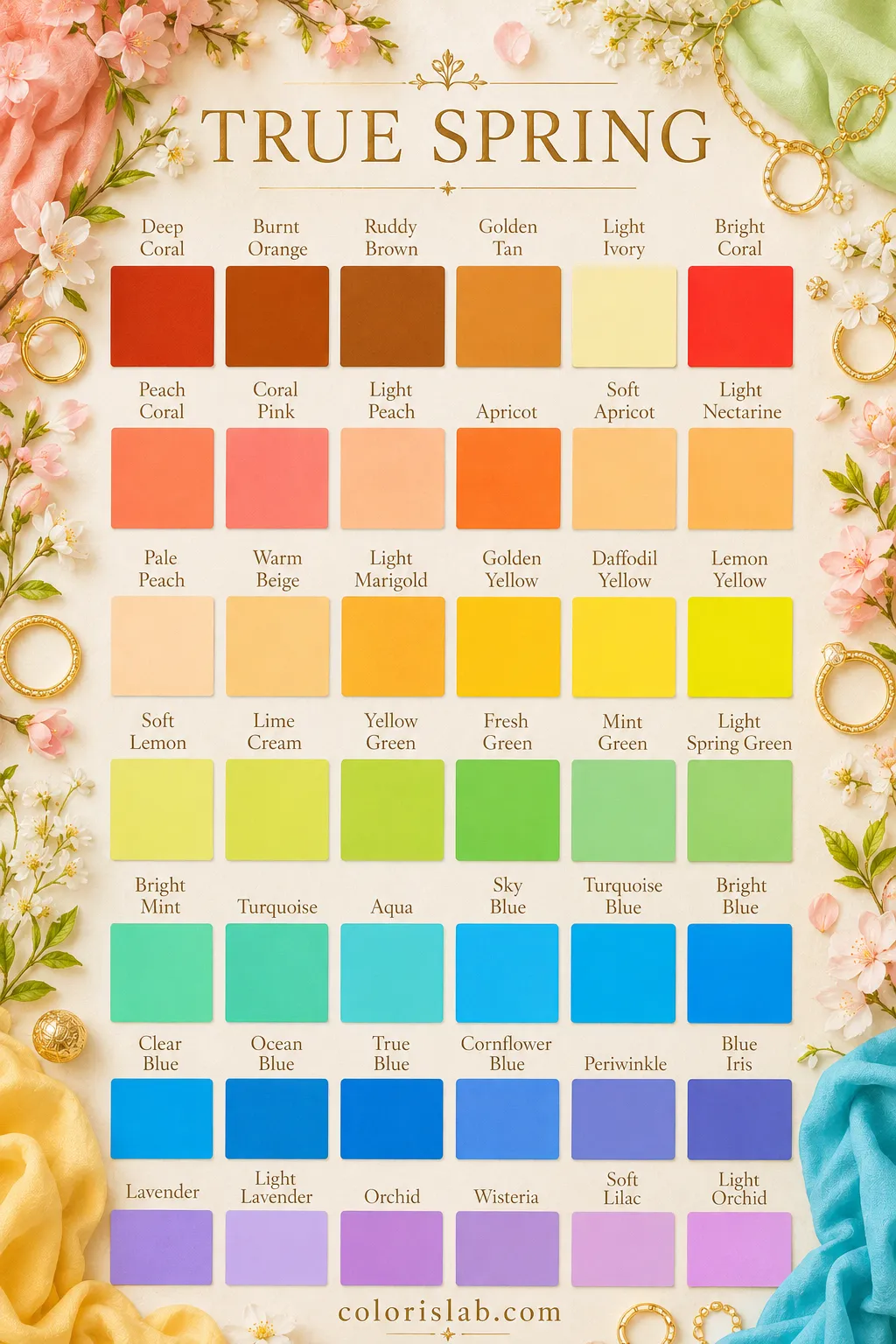
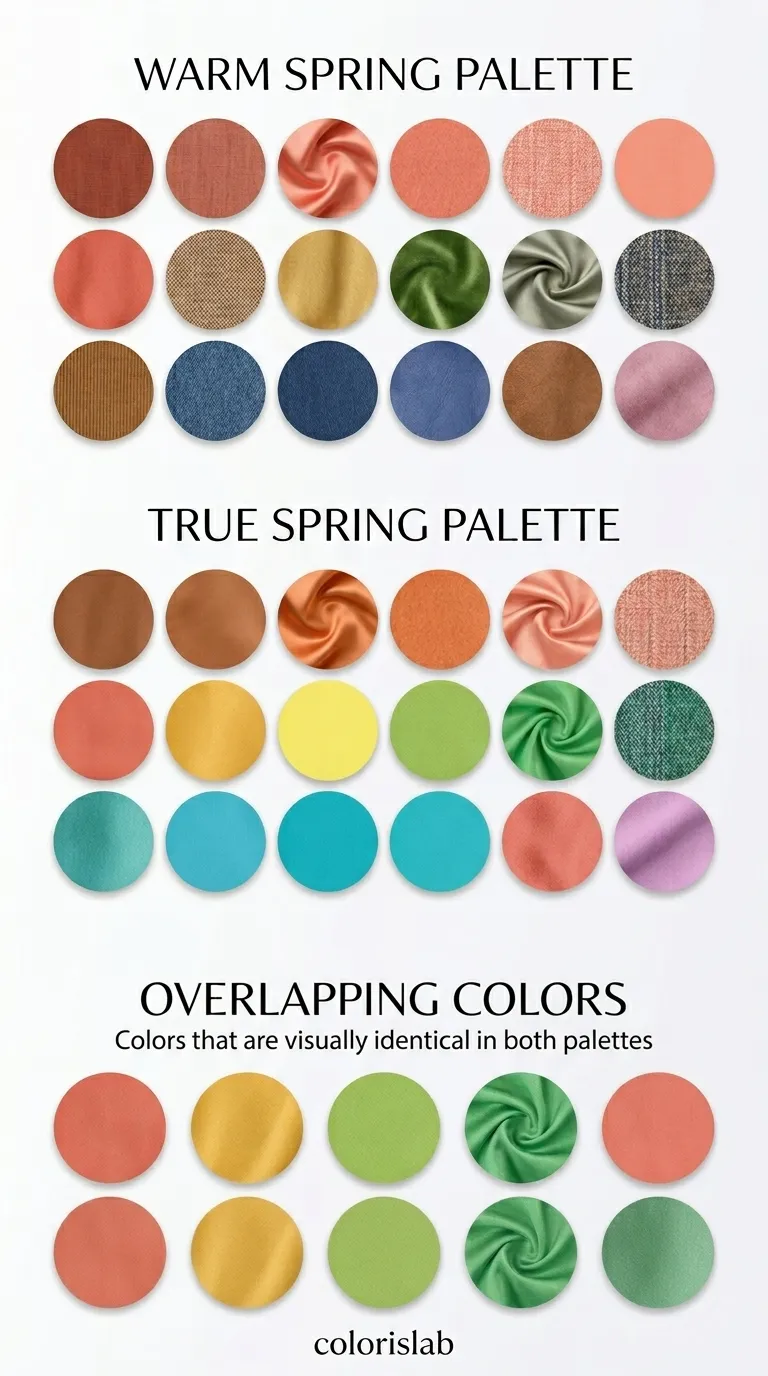
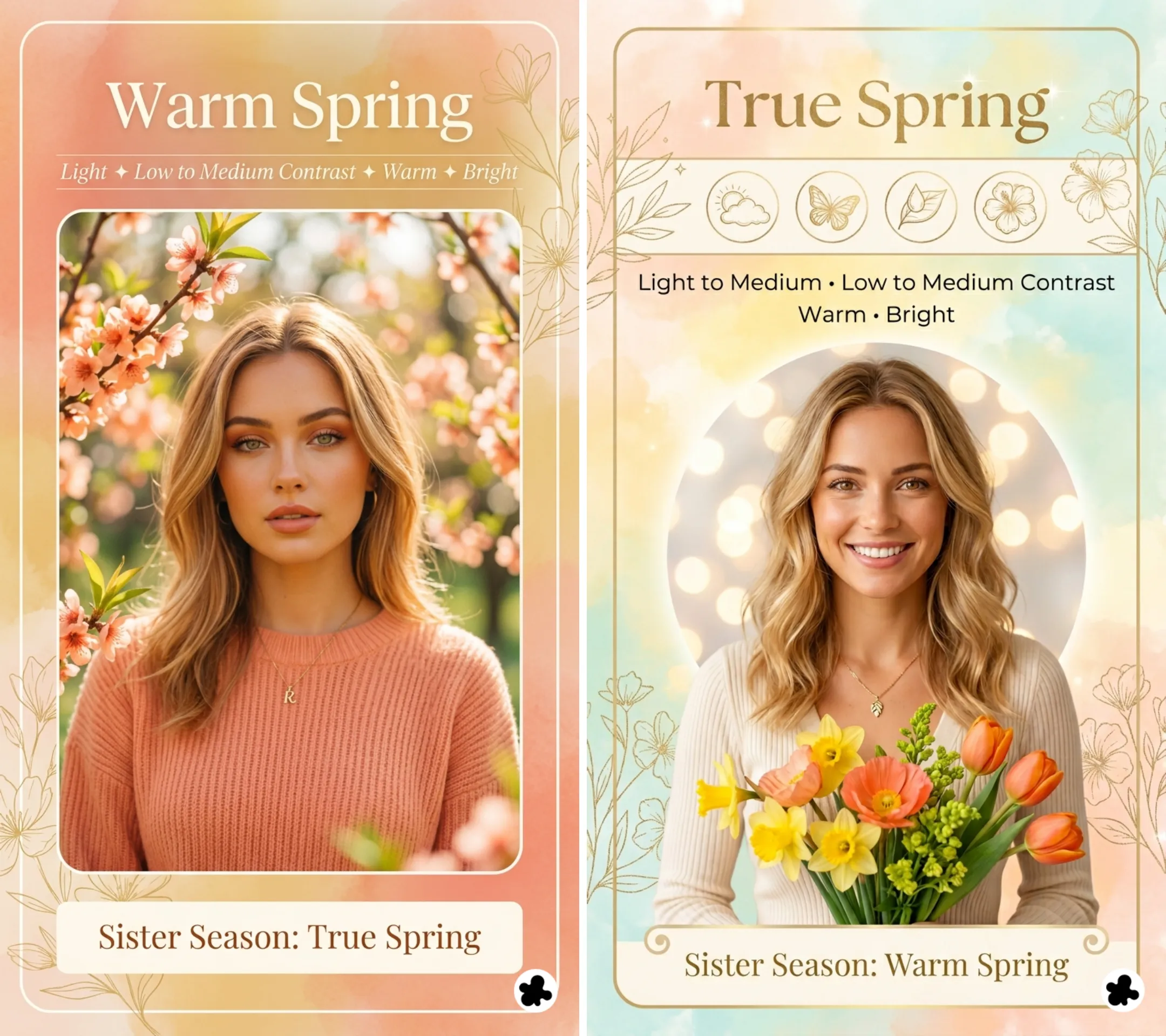
In the 12-season system, Warm Spring and True Spring are often used interchangeably. In the 16-season system, they are treated as distinct seasons.
Warm Spring
Value
Light
Contrast
Low to medium
Undertone
Warm
Chroma
Bright
Sister season
True Spring
True Spring
Value
Light to medium
Contrast
Low to medium
Undertone
Warm
Chroma
Bright
Sister season
Warm Spring
Warm Spring is the season that needs the least explanation. You already know you are warm. Gold jewelry has always looked right. Coral and peach have always made people ask what you are doing differently. Cool tones like the icy blues, the rose-based pinks, the blue-toned reds, have always read as slightly off, as if they belong to someone else's face.
That clarity of warmth is exactly what defines this season. Of the three Spring sub-seasons, Warm Spring is the one where warmth is the dominant characteristic rather than a secondary one. It is not warm and light, like Light Spring. It is not warm and vivid, like Clear Spring. It is warm first, and everything else follows from that.
Read the 12 seasons guide if you want to understand where Warm Spring sits in the full system before going further.
Warm Spring
Spring family · True season
Dominant
Warm (Temperature)
Secondary
Bright (Chroma/Saturation)
Metals
Yellow gold, bronze
🌿
Warm Spring Coloring: What to Look For
The most reliable way to identify Warm Spring coloring is the immediate impression of golden warmth. Features are warm across the board, skin, hair, and eyes all reinforce the same temperature reading. There is no coolness anywhere. The contrast between features is low to medium, and the overall effect is harmonious and glowing rather than striking or high-contrast.
🧴
Skin
Warm Spring skin has a clear, obvious warm undertone, golden, peachy, or honeyed. The warmth is not subtle or neutral. There is no pink or cool cast. The range runs from fair to medium-deep, always with that characteristic golden quality. Warm Springs tan easily and well, building a golden rather than bronze or olive tone in the sun. Freckles are common, warm, golden-brown, and scattered across the nose and cheeks.
Fair golden
Light golden beige
Honey tawny
Warm chestnut
💇
Hair
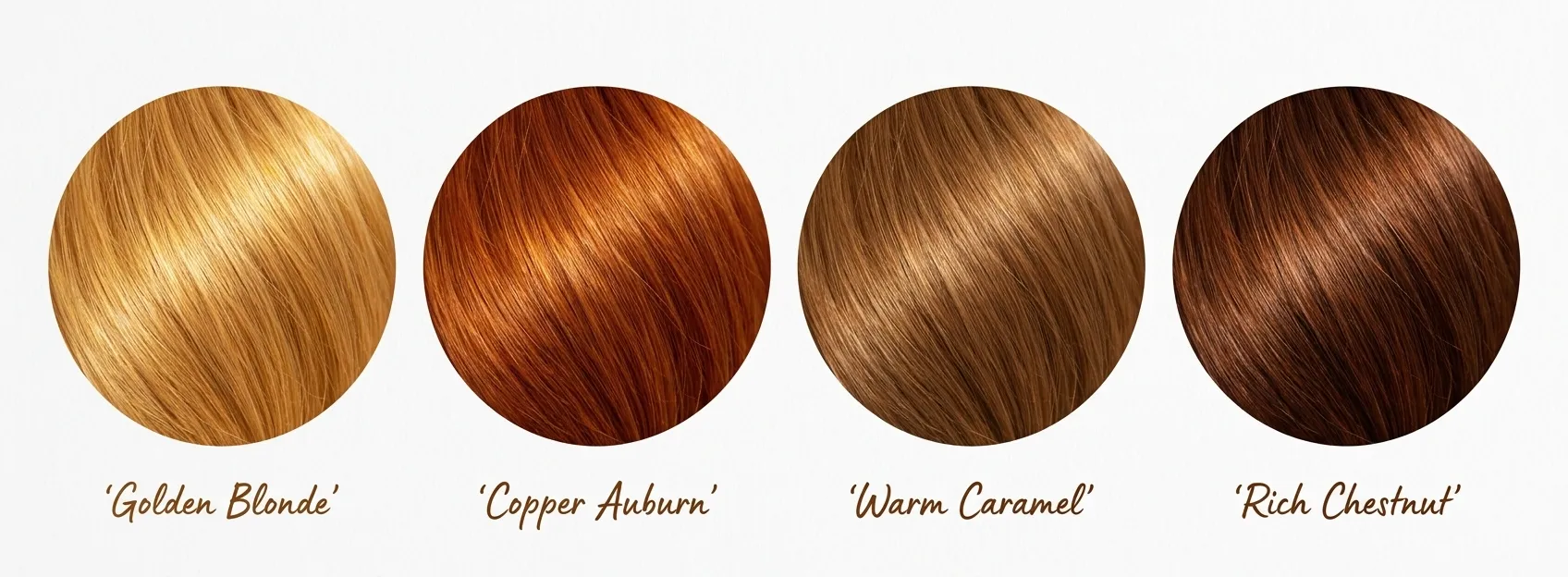
Warm Spring hair is never ashy or mousy. The warmth is obvious, golden highlights, copper glints, a rich honey tone. Blondes are golden or strawberry, never platinum. Reds are copper and auburn, never cool burgundy. Browns are caramel and chestnut, never flat or dark. Even dark hair, when it appears, will have warm brown or gold undertones rather than a cool blue-black cast.
Golden blonde
Copper auburn
Warm caramel
Rich chestnut
👁️
Eyes
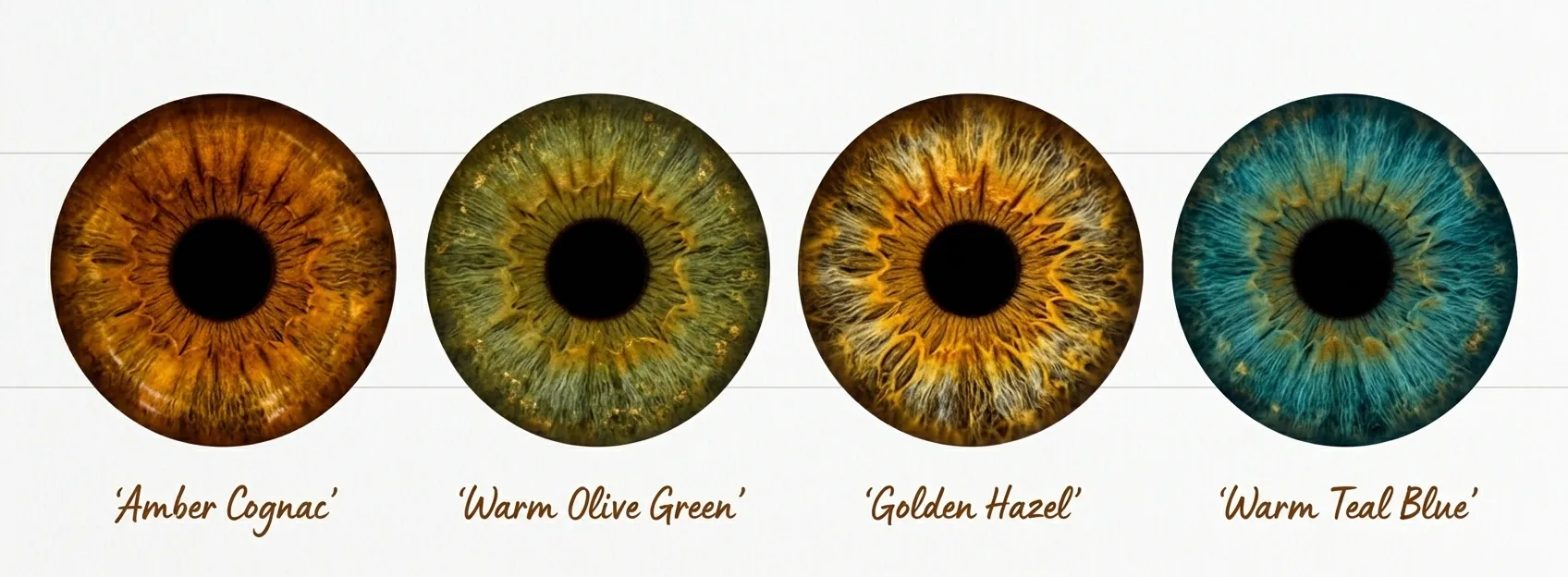
Warm Spring eyes are clear and warm. Browns are amber, cognac, or golden with visible gold flecks. Greens are warm olive or leaf green, often with a sunburst pattern around the pupil. Hazels are a rich mix of brown, green, and gold. Even blue eyes, when they appear, lean warm, toward turquoise or bright teal rather than icy or grey-blue.
Amber cognac
Warm olive green
Golden hazel
Warm teal blue
🎨
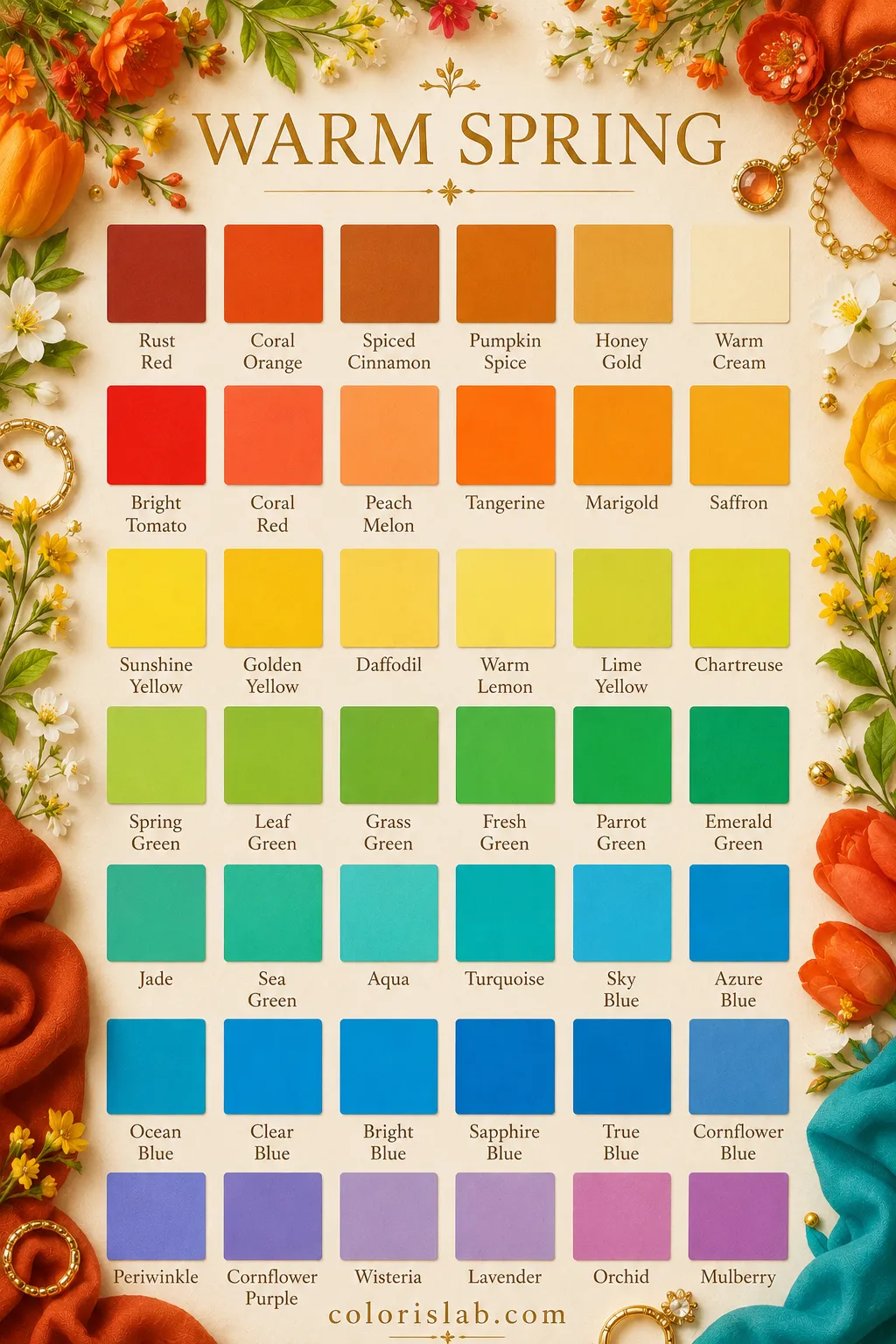
The Warm Spring Color Palette
Warm Spring colors are warm, clear, and medium in depth, not as light as Light Spring, not as vivid as Clear Spring. Think of a sun-drenched garden at peak spring: ripe apricots, marigolds, warm turquoise water, golden sunlight. The palette sits at medium chroma, clear enough to carry vibrancy, warm enough that anything cool or dusty reads as foreign.
✓ Colors that work
Golden yellow
Marigold
Coral
Warm peach
Tomato red
Warm turquoise
Grass green
Warm jade
Camel
Cream
Warm brown
Golden tan
✗ Colors that don't work
True black
Stark white
Icy cool blues
Cool pink
Blue-based reds
Cool lavender
Dusty muted tones
Ash grey
Deep rust
Chocolate brown
Burgundy
Navy
Colors that fail on Warm Spring tend to fail in one of two ways: they are too cool, which makes the skin look sallow, or they are too muted and earthy, which drains the natural vibrancy. The palette needs to stay warm and clear. When in doubt, hold the color to your face in natural light. If the skin looks golden and alive, the color is right. If it looks flat or slightly greenish, it is wrong.
Warm Spring is one of the clearest-cut seasons when it comes to metals. Yellow gold looks completely natural, not just good, but obviously right, as if the metal and the skin were designed together. Silver, by contrast, looks separate and slightly cold. This is one of the most reliable quick tests for Warm Spring: if you have always reached for gold instinctively, that instinct is correct.
Yellow gold
Bronze
Rose gold
Champagne gold
Warm copper
Silver (all finishes)
White gold
Gunmetal
For gemstones, warm and vibrant reads best: citrine, peridot, golden topaz, coral, turquoise, amber, and warm garnet. Cool gems like sapphire, amethyst, and cool aquamarine, sit at the wrong temperature for this season and will look disconnected from the skin.
Warm Spring makeup should enhance the natural golden glow, not cover it. The goal is skin that looks luminous and alive. Heavy matte coverage, cool-toned pigments, and anything with a grey or blue base all work against the natural warmth. The best results come from formulas and shades that read as a more radiant version of your own coloring.
Look for warm, golden, or yellow-undertoned formulas. Descriptors like warm, golden, honey, or beige are useful guides. Avoid anything pink-based or cool-toned. A dewy or satin finish will enhance the natural glow better than heavy matte coverage.
warm golden
honey beige
peachy nude
Peach, apricot, coral, and soft terracotta. Warm pinks work well. Apply to the apples of the cheeks for a sun-kissed flush. Avoid deep roses, cool mauves, and anything with a berry or blue undertone.
peach
apricot
terracotta
Gold, bronze, copper, warm brown, and peach for everyday. Warm turquoise or leaf green as a pop of color on the lid. Eyeliner in warm brown rather than harsh black. Brown-black mascara rather than jet black reads as more natural on this coloring.
gold
warm brown
copper
Coral, warm pink, peach, tomato red, and warm berry. Glossy and satin finishes suit this season well. Avoid cool pinks, blue-based reds, mauve, plum, and beige nudes that pull grey or cool.
coral
tomato red
warm peach
⚖️
Warm Spring vs. Neighboring Seasons
Warm Spring is most commonly confused with three seasons: Light Spring, Clear Spring, and Warm Autumn. In each case a single dimension separates them cleanly.
Hue dominates. The warmth registers first. Vivid, golden colors look energising and natural. The palette can carry more saturation and depth.
Value dominates. The lightness registers first. Vivid or deeply golden colors feel too intense. The palette needs to stay gentle and airy.
The test: Try a vivid golden yellow and a soft buttery yellow side by side. If the vivid version looks alive and the soft version looks flat, you are Warm Spring. If the soft version looks right and the vivid version is too loud, you are Light Spring.
Warm first. The palette is medium in depth and temperature-driven. Electric or very high-contrast colors can feel slightly sharp. Warmth is what the eye reads first.
Vivid first. Has a cool influence from Winter that adds contrast and brightness. Electric colors look natural. High contrast combinations work well.
The test: Try a vivid electric blue next to a warm turquoise. If the electric blue looks sharp or slightly cool, you are Warm Spring. If it looks alive and energising, you may be Clear Spring.
Warm and clear. The palette is medium in depth and has a freshness to it. Earthy, heavy tones feel too grounded. Colors read as vibrant and alive.
Warm and deep. The palette is richer and more grounded. Earthy tones like rust, olive, and chocolate look natural and right. Spring colors can feel slightly too bright.
The test: Try a rich rust and a warm coral side by side. If the rust looks grounded and right and the coral looks a little too bright, you lean Warm Autumn. If the coral looks alive and the rust feels heavy, you are Warm Spring.
👗
Building a Warm Spring Wardrobe
A Warm Spring wardrobe is built around three things: a warm neutral foundation that replaces black and white, a core set of signature Warm Spring tones, and an understanding of how to combine colors without creating too much contrast.
Cream replaces stark white. Camel and warm tan replace grey and black. Warm brown replaces navy. These neutrals harmonize with the skin rather than creating harsh contrast against it. A camel coat, cream blouse, and warm taupe trousers form a base that works for everything.
Cream
Camel
Golden tan
Warm brown
These are the colors that make Warm Spring coloring come alive. A coral blouse, a warm turquoise linen shirt, a golden yellow knit. These are the pieces that consistently generate compliments because they work with the natural coloring rather than fighting it.
Coral
Warm turquoise
Golden yellow
Tomato red
Grass green
Warm Spring has low to medium natural contrast, so extreme light-dark combinations read as too sharp. Color blocking within the warm palette works well: coral with turquoise, golden yellow with warm brown, cream with camel. For prints, bold warm florals, geometric patterns in palette colors, and ethnic motifs with warm tones all look natural. Avoid soft blurred or pastel prints, which belong to cooler or lighter seasons.
🤖
Still unsure if you're a Warm Spring?
The most common point of confusion is the border with Warm Autumn. Both seasons are strongly warm. The difference is depth. Our AI tool analyzes your photo for undertone and value and gives you a starting point before going further into either guide.
Try the Free AI Tool →
❓
Frequently Asked Questions
Is Warm Spring the same as True Spring?
↓
In the 12-season system, yes. True Spring and Warm Spring are two names for the same sub-season: the one where warmth is the dominant characteristic within the Spring family. Some systems use True Spring to indicate the most representative expression of the season; others use Warm Spring to distinguish it from the broader four-season Spring. The palette and coloring description are identical. In a 16-season system, the two can refer to different things, as that system subdivides further and True Spring may occupy a narrower position within the warm Spring range.
Do all Warm Springs have red or copper hair?
↓
No. Many Warm Springs do have red or copper hair, and it is probably the most iconic Warm Spring combination, but the season includes golden blondes, warm caramel brunettes, and rich chestnuts. The defining quality is warmth, not the specific shade. What all Warm Spring hair has in common is the absence of any ash, cool, or grey quality. If your hair has golden or copper tones in sunlight, that is more relevant than the base color.
Can a Warm Spring wear black?
↓
Black is not a Warm Spring color. It is too cool and too stark for a season where warmth and medium contrast define the coloring. Near the face, it will make the skin look sallow or washed out. Warm dark brown, rich chocolate (if it is warm-toned), or a deep warm charcoal are much better alternatives and create a similar visual weight without the coolness. In items away from the face, like shoes or a bag, the impact is lower, but the general rule holds.
Is Warm Spring the same as Warm Autumn if both are warm?
↓
Both seasons share strong warm
undertones, but they differ in depth and chroma.
Warm Autumn is deeper, richer, and more earthy. Its palette includes rust, olive, and chocolate colors that are too heavy for most Warm Springs. Warm Spring is clearer and fresher. Its palette needs warmth but also lightness. If you put on rust and feel grounded, you are likely Warm Autumn. If you put on coral and your skin glows, you are likely Warm Spring.
Can Warm Springs have cool-toned features?
↓
No. Warm Spring is defined by warmth as the dominant characteristic across all features. If your skin, hair, or eyes have a clearly cool quality, pink or rosy skin, ash hair, or grey-blue eyes, Warm Spring is unlikely to be the right season. That said,
skin tone as seen day-to-day can be affected by sun exposure, redness, or other variables. Color analysis works from the underlying undertone, not the surface. Draping in warm versus cool colors is the most reliable way to confirm.
What is the difference between Warm Spring and True Spring?
↓
In the 12-season system, Warm Spring and True Spring are used interchangeably and refer to the same season. In the 16-season system, they are treated as two distinct sub-seasons within the Spring family. Warm Spring sits closer to Autumn on the spectrum, leaning more strongly warm with slightly less brightness, while True Spring is the purest expression of the Spring season with a clear warm undertone and full chroma. If you have been assigned either name, the system your analyst uses determines which one applies to you.