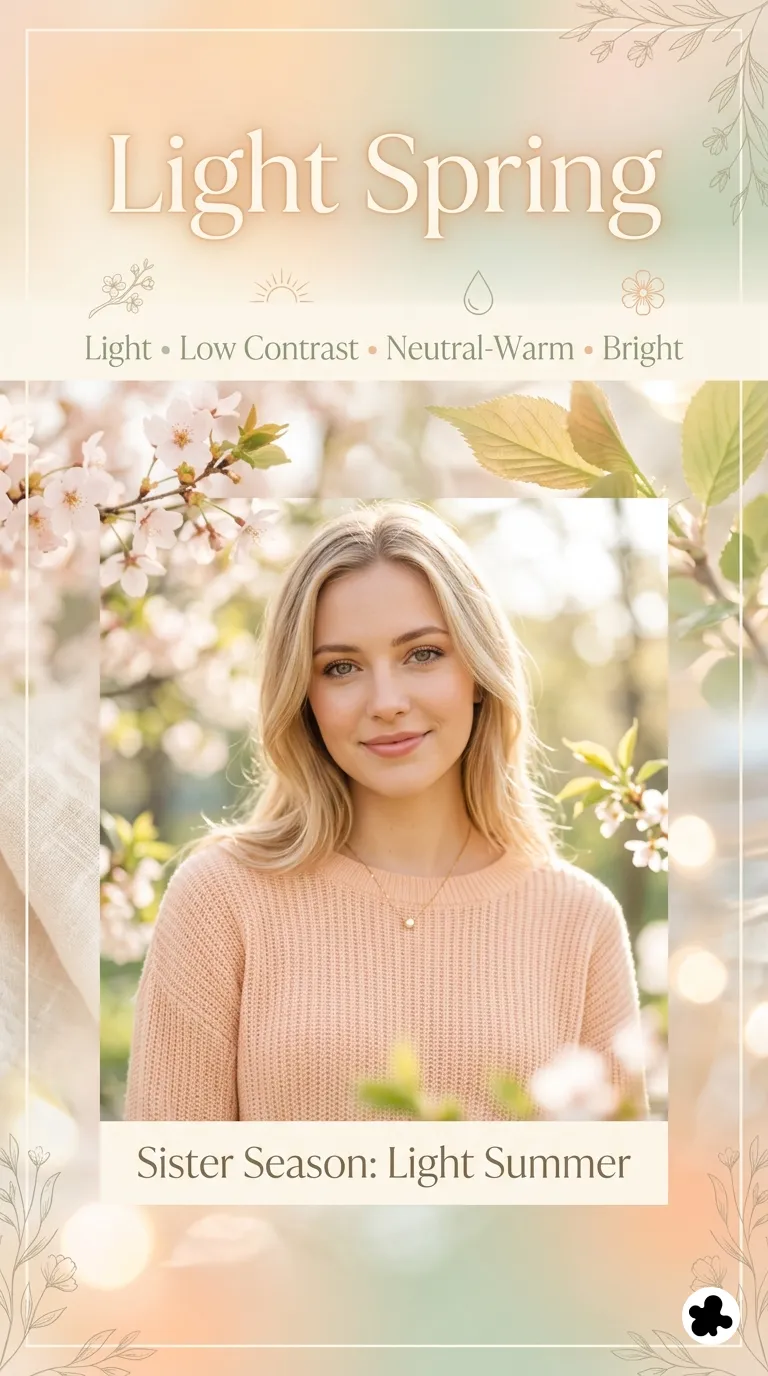
Light Spring Overview
Value
Light
Contrast
Low
Undertone
Neutral-warm
Chroma
Bright
Sister season
Light Summer
Light Spring is the sub-season that makes the most people feel finally understood. You already knew you were warm, cool tones always looked slightly off. But the vivid, deeply golden end of the Spring palette also felt like too much: too saturated, too loud, too warm for skin that reads as fair and gentle. And Summer never worked either. Those cool, ashy tones made you look washed out in a different way.
That space between two seasons is exactly where Light Spring lives, between Warm Spring and Light Summer. Your dominant characteristic is lightness above anything else, with low contrast as the secondary feature, which makes your overall coloring appear delicate and airy.
Your Spring influence shows through brightness. It is clearly present, but it sits softly rather than announcing itself.
Your undertone is always neutral leaning warm, which means you can tolerate a certain degree of coolness in your palette. This is why Light Summer is considered the sister season to Light Spring, while at the same time you can also handle a noticeable level of warmth.
Together, these qualities create a look that is luminous and fresh in a way that neither True Spring nor Light Summer fully achieves.
Of the twelve seasons, Light Spring is the one that most often borders two families at once. It can borrow from the warmest edge of Light Summer and from the lightest edge of Warm Spring. That crossover is not ambiguity. It is by design. Read the full 12 seasons guide if you want to understand how border seasons work.
Light Spring
Spring family · Borders Summer
Chroma (Saturation)
Bright
Undertone (Temperature)
Neutral leaning warm
Sister season
Light Summer
🌿
Light Spring Coloring: What to Look For
The single most reliable way to identify Light Spring coloring is the overall impression of fairness and delicacy. This is a season where nothing is bold or vivid. Features harmonize softly rather than contrasting sharply. The contrast between hair, skin, and eyes is low to medium at most. When you look at someone who is a Light Spring, the first word that comes to mind is usually just fresh, not "striking" or "warm" or "cool", just fresh.
🧴
Skin
Light Spring skin is light for the person's ethnicity and has a neutral-warm undertone, the classic description is "peaches and cream." The golden warmth is present but it is quiet. This is not the distinctly honeyed or golden warmth of Warm Spring, and it is not the clearly rosy cool of Light Summer. It sits in a gentle middle ground that reads as naturally warm rather than neutral or pink.
Fair porcelain, golden tint
Light ivory, creamy warmth
Light golden beige
Soft honey tones
Freckles are common but soft and delicate, scattered gently rather than prominently clustered.
💇
Hair
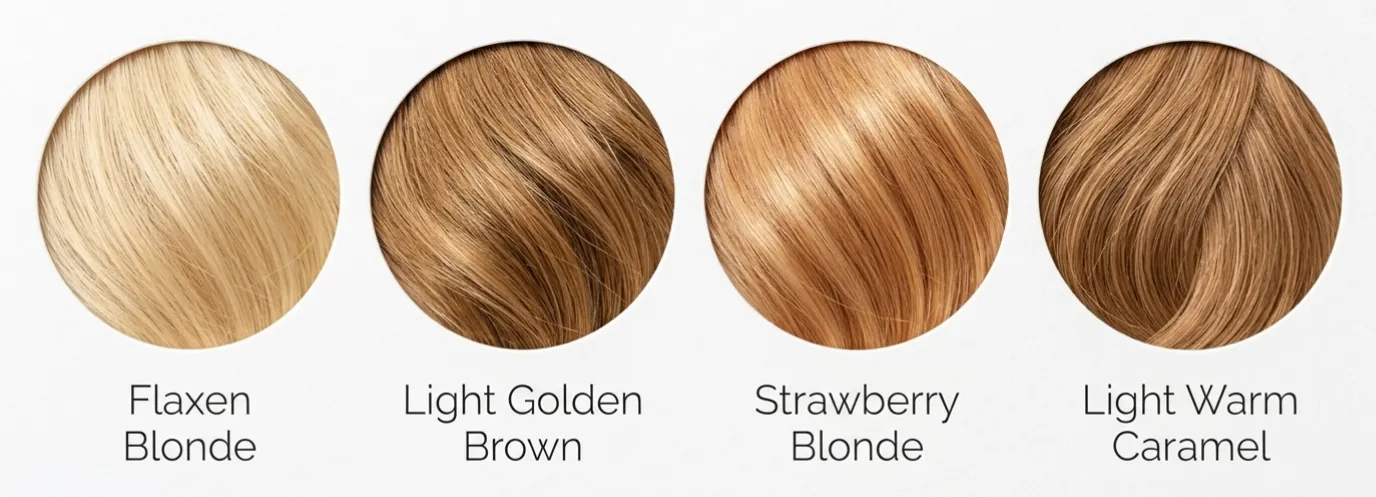
Light Spring hair is always light for the person's ethnicity and always warm. It never tends toward ash, and it never gets deeply dark naturally. Many Light Springs were noticeably blonde as children and may have darkened slightly into a light warm brown by adulthood, but the warm quality persists. Platinum, ash, or white-blonde is never a Light Spring color, those belong to the cooler side of the spectrum.
Flaxen / honey blonde
Light golden brown
Strawberry blonde
Light warm caramel
👁️
Eyes
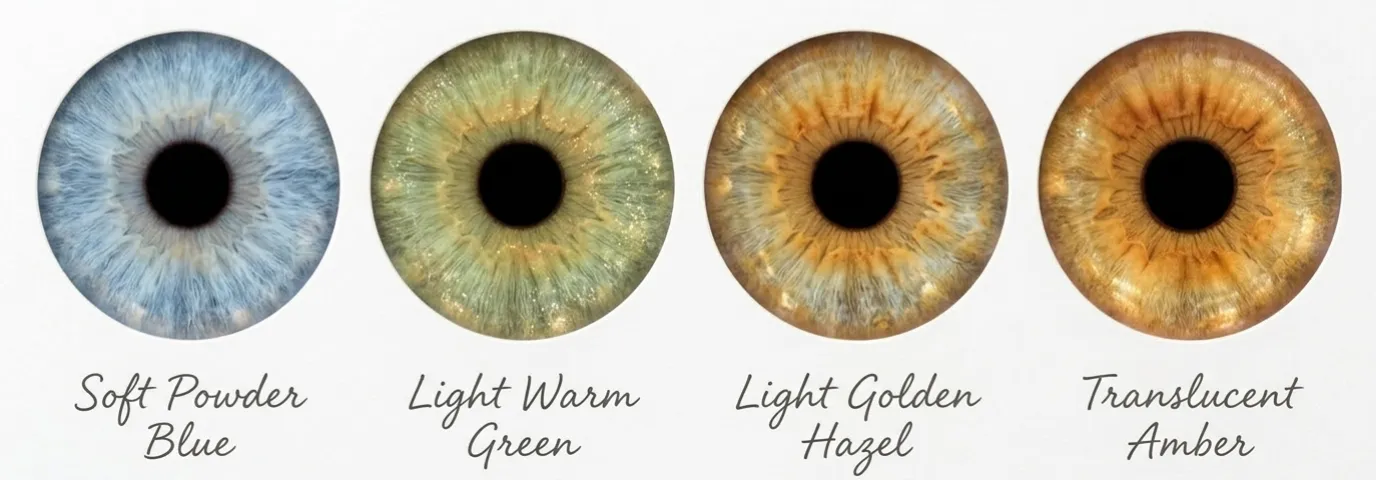
Light Spring eyes are gentle and light, never sharp or piercing. They have a soft, welcoming quality with no harsh contrast between the iris and the white of the eye. Blues are aqua-leaning or powder rather than icy. Greens are soft and warm rather than vivid. Hazels are light and golden. Even the brown eyes found in Light Springs read as translucent amber rather than dark and deep.
Soft powder blue
Light warm green
Light golden hazel
Translucent amber
🎨
The Light Spring Color Palette
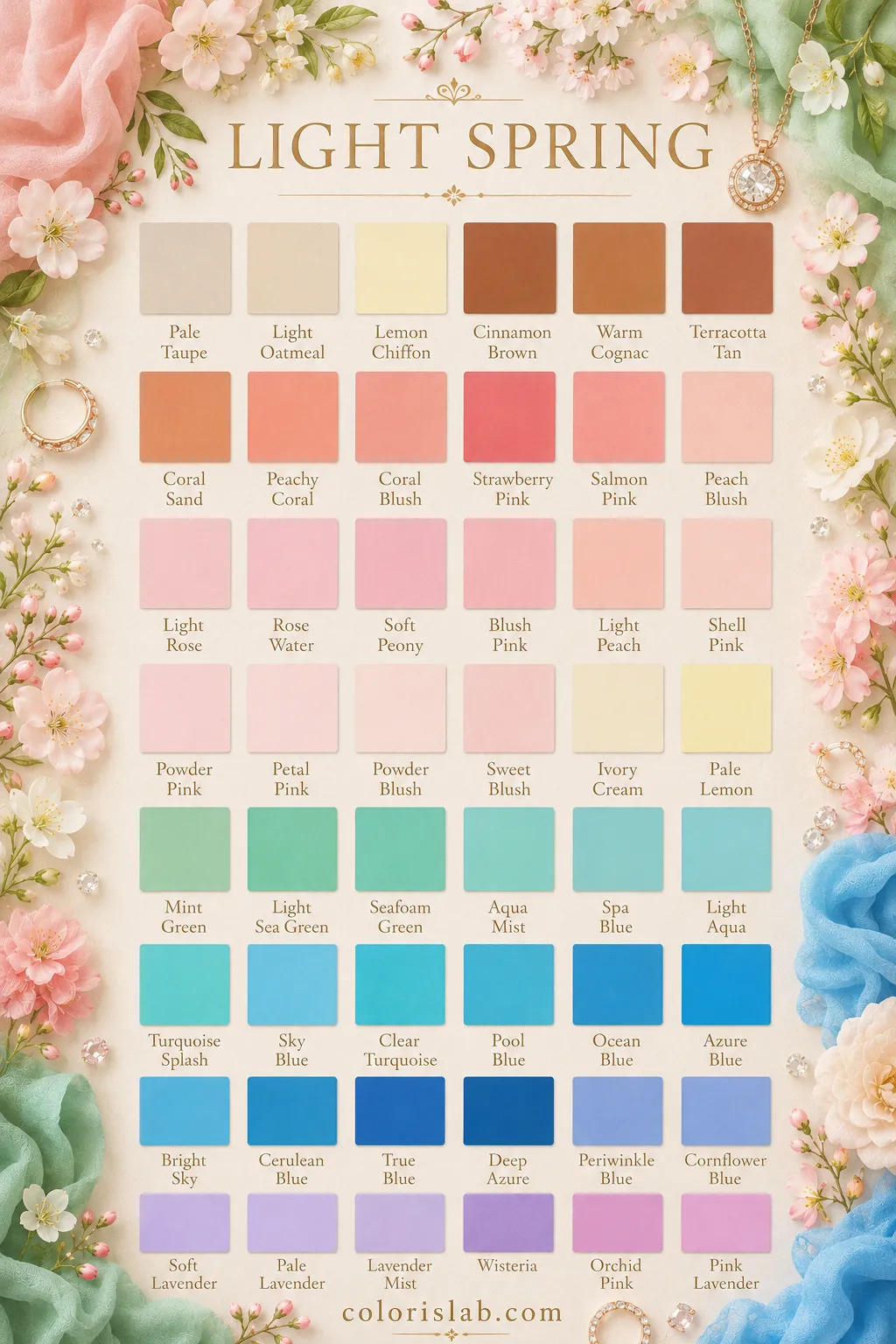
Light Spring colors share three qualities: they are warm, they are light to medium in depth, and they have a freshness rather than a dusty or muted quality. Think of the colors of a spring garden photographed in the soft light of early morning: peach, powder blue, cream, soft mint, warm ivory. Nothing is saturated to the point of vividness. Nothing is heavy enough to carry weight.
The palette sits at medium chroma, not dusty and muted like Soft Autumn or Soft Summer, but not saturated and vivid like Clear Spring. It is the sweet spot between those two extremes, and it is exactly calibrated for coloring that cannot tolerate either end.
✓ Colors that work
Soft peach
Warm ivory
Buttercream
Warm blush
Warm coral
Soft mint
Powder blue
Soft lavender
Warm aqua
Pale honey
Light camel
Warm taupe
✗ Colors that don't work
True black
Deep navy
Chocolate brown
Icy cool pastels
Dusty earthy tones
Burnt orange
Deep mustard
Electric brights
The common thread among colors that fail on Light Spring is intensity in any direction: too dark, too vivid, too dusty, or too cool. The palette needs to stay light and warm. When in doubt, hold the color up to your face in natural light: if shadows deepen and the complexion looks grey or flat, the color is wrong. If the skin looks clearer and the face seems to come forward, it is right.
Light Spring is one of the few sub-seasons where both gold and silver can work, a consequence of the neutral-warm undertone that sits between the two. But the gap between them is still real and noticeable if you look for it. Gold looks natural and harmonious. Silver looks clean but slightly cooler than ideal. Rose gold and champagne gold are arguably the best options of all, sitting precisely at the intersection of Light Spring's warm but gentle coloring.
Yellow gold
Rose gold
Champagne gold
Soft silver (matte)
Warm bronze (light)
Bright polished silver
Dark antique metals
Gunmetal / dark silver
For gemstones, the same principle applies: light, warm, and luminous. Peach morganite, rose quartz, light citrine, soft aquamarine, and warm pearl all sit beautifully against Light Spring coloring. Stark bright gems like traditional diamonds or deeply saturated stones like sapphire or ruby have too much intensity for the delicacy of this season.
💄
Makeup for Light Spring
Light Spring makeup follows the same logic as the palette: warm, light, and fresh. The goal is skin that looks alive and glowing, not covered or dramatically altered. Heavy matte foundations, dark contouring, and cool-toned pigments all work against the natural quality of this coloring. The best Light Spring makeup looks are the ones where you cannot quite identify what has been applied. Everything simply reads as healthy.
Look for shades described as warm ivory, golden beige, or peachy nude. Avoid pink-based or cool-toned formulas. A dewy or satin finish brings out the natural luminosity of Light Spring skin better than heavy matte coverage.
warm ivory
golden beige
peachy nude
Peach, apricot, and soft coral are your most flattering options. Warm pinks work well. Apply lightly. Light Spring coloring benefits from a soft flush rather than defined color. Avoid deep roses, cool mauves, or anything with a berry undertone.
peach
apricot
soft coral
Champagne, soft gold, warm taupe, and light peach for everyday. Soft mint or powder blue as a gentle pop of color on the lid. Eyeliner in warm brown or soft khaki rather than harsh black, which reads as more natural and does not overpower the lightness. For mascara, brown-black rather than jet black.
champagne
warm taupe
soft mint
Soft peach, warm pink, coral, melon, and light terracotta. Glossy or satin finishes flatter Light Spring lips more than matte, which can look flat. Deep berries, cool-based reds, plums, and brown-based nudes all carry too much weight for this season.
soft peach
warm coral
melon
⚖️
Light Spring vs. Neighboring Seasons
Light Spring has three seasons it is most commonly confused with. Two of them share the word "light": Light Summer. One shares the spring family: Warm Spring. In each case, there is a single dimension that separates them cleanly.
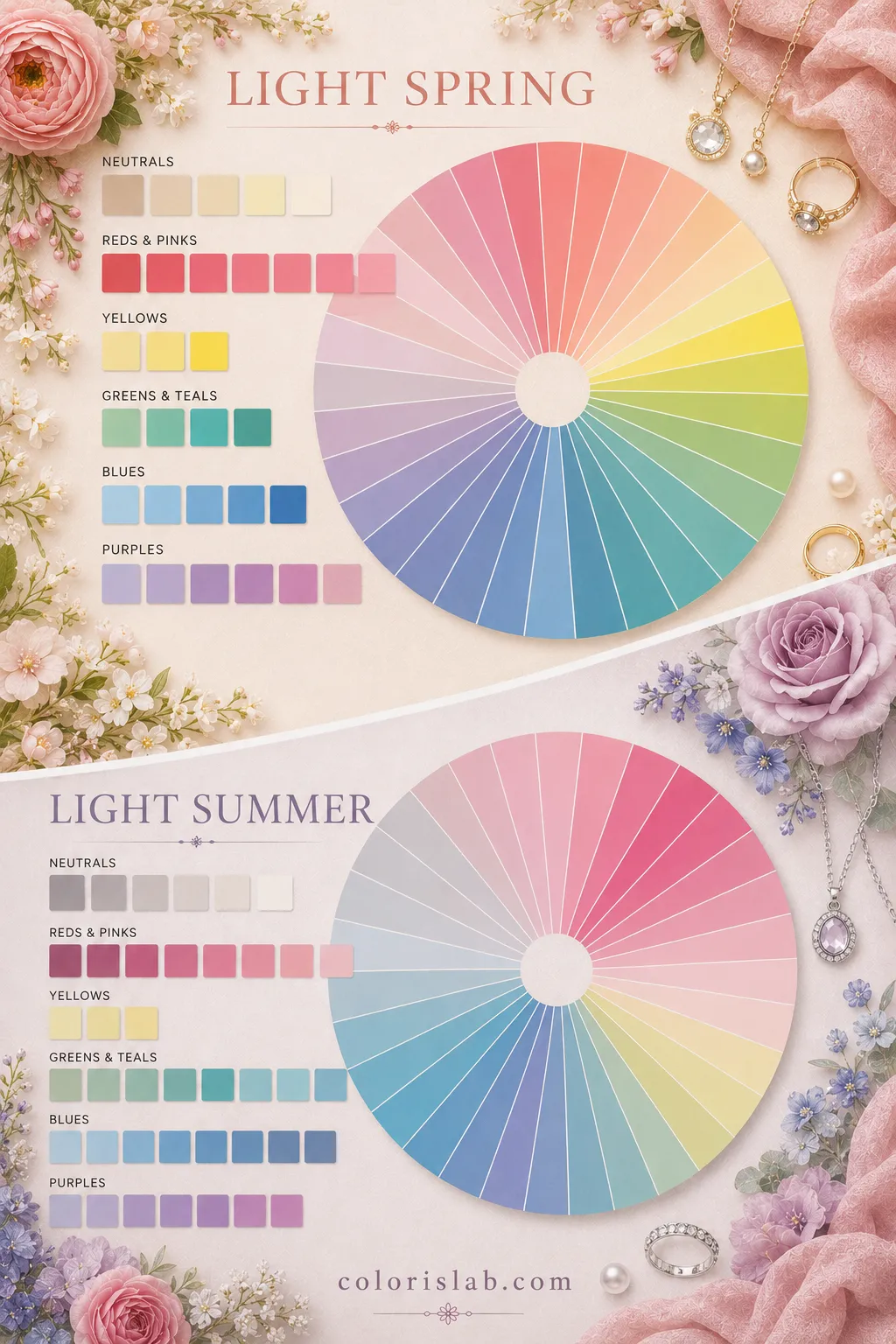
Neutral-warm undertone. Warm peach tones look natural and right. A warm powder blue or aqua reads as fresh and alive on skin. Gold feels harmonious.
Neutral-cool undertone. Cool powder tones look natural and right. A warm peach or golden ivory looks slightly forced or overcooked. Silver feels more harmonious.
The test: Hold a warm peach fabric and a cool powder blue-grey fabric up in turn. Whichever makes the skin look clearer and less shadowed tells you which season you are.
Value dominates. The lightness of the coloring is the first thing that registers. Vivid or deeply golden colors feel intense or heavy, so the palette needs to stay gentle and light.
Hue dominates. The warmth of the coloring is what registers first. Clear, vivid warm colors look energising rather than intense. The palette can carry more saturation and depth than Light Spring.
The test: Try a vivid golden yellow and a soft buttery yellow. If the vivid version looks alive and the soft version looks dull, you are likely Warm Spring. If the soft version looks right and the vivid version is too loud, you are Light Spring.
Light and fresh. Colors need to stay in the lighter range. Earthy, dusty, or muted warm tones feel heavy and muddy rather than grounded. The palette reads as clear.
Muted and earthy. Colors need a dusted-down quality. Light, fresh colors can feel too airy or lacking in depth. The palette reads as blended and warm throughout.
The test: Try khaki versus soft mint, or warm taupe versus buttercream. If the khaki and taupe look right and the lighter tones feel too airy, you are Soft Autumn. If the lighter colors look fresh and the earthy tones feel heavy, you are Light Spring.
👗
Building a Light Spring Wardrobe
A Light Spring wardrobe is built from three layers: light neutral foundations, a core set of signature Light Spring tones, and a few accent colors that provide gentle variation without overwhelming the overall delicacy.
Your neutral base consists of warm ivories, creams, light camel, warm taupe, and soft greige. These replace the black and dark navy that most neutral wardrobes rely on. A warm ivory blazer, cream trousers, and light camel coat cover everything a dark neutral covers, without the heaviness that overwhelms Light Spring coloring.
Warm ivory
Light camel
Warm taupe
Buttercream
These are the colors that make Light Spring coloring glow. A soft peach blouse, a warm aqua linen shirt, a blush-toned dress. These are the pieces that look immediately right in a way that no amount of styling with the wrong colors will achieve. Build around them.
Soft peach
Warm aqua
Warm blush
Soft mint
Soft lavender
Light Spring has low to medium natural contrast, so clothing combinations should reflect this. High contrast pairings, like a deep color next to a very pale one, look jarring rather than striking. Instead, tone-on-tone combinations within the Light Spring palette work beautifully: soft peach with warm ivory, powder blue with lavender, mint with cream. For prints, delicate florals, soft watercolor effects, and small-scale patterns are far more harmonious than bold graphic designs.
🤖
Still unsure if you're a Light Spring?
The hardest part of Light Spring identification is the border with Light Summer. Both seasons look delicate and both are low-contrast. Our AI tool analyzes your photo for undertone and chroma and gives you a starting point before reading deeper into either season's full guide.
Try the Free AI Tool →
❓
Frequently Asked Questions
What are the characteristics of Light Spring?
↓
Light Spring is defined by light value, low contrast, a neutral leaning warm undertone, and a touch of brightness. The overall coloring appears soft, fresh, and airy rather than bold or intense. This season sits between Warm Spring and Light Summer, which is why it can tolerate a small degree of coolness while still leaning warm. The result is a luminous, delicate appearance that responds best to light, clear, and slightly warm colors.
Am I a Light Spring?
↓
You may be a Light Spring if your overall coloring appears light, soft, and fresh, with low contrast between your hair, skin, and eyes. Your undertone leans warm but is not extremely warm, which allows you to tolerate some cooler shades without looking completely off. Very dark or heavy colors tend to overwhelm your features, while light, luminous tones make your skin look clearer and your overall appearance more balanced. If you notice that soft, airy colors bring you to life while deep or muted tones make you look tired, Light Spring is a strong possibility.
Can a Light Spring wear black?
↓
Black overwhelms Light Spring coloring in most situations. It is too heavy, too dark, and introduces a stark contrast that does not suit low-to-medium contrast coloring. If you need a dark color, soft charcoal, warm dark brown, or a very deep navy used sparingly will create a similar effect without the harshness. In clothing that is away from the face, like trousers, shoes, or a bag, the impact is less, but near the face it will always pull the eye away from your features.
What if I tan easily, can I still be a Light Spring?
↓
Yes.
Skin tone is variable. It changes with sun exposure, seasons, and age. Color analysis reads your natural coloring, not your tanned state. Light Springs who tan will develop a gentle golden-peach tone rather than a deep bronze or olive. The value of your natural coloring is what determines your season, and many Light Springs are lighter than their sun-exposed skin would suggest. Analyzing yourself in winter or out of direct sun gives a more accurate result.
Is Light Spring the same as Soft Summer if both are low contrast?
↓
No. Low
contrast describes the relationship between features, not the colors that suit you.
Soft Summer has low contrast and a cool-muted
undertone. Its palette is dusty and blended. Light Spring has low to medium contrast and a neutral-warm undertone. Its palette is fresh and airy. The two will share a low contrast quality but their ideal colors diverge immediately in both temperature and depth.
Can Light Springs have dark hair naturally?
↓
It is uncommon but possible, particularly in some ethnicities where overall coloring is lighter than the hair alone would suggest. The full coloring is what matters. Skin, hair, and eyes read together. If someone has medium-warm brown hair but very fair, warm skin and light eyes, the overall impression may still read as Light Spring. But in most cases, Light Springs have noticeably light hair relative to their ethnic background. Very dark, deep hair combined with fair warm skin is more characteristic of a border season like
Deep Autumn or
Deep Winter.
How does hair dye affect Light Spring identification?
↓
Hair dye changes the visual balance of your coloring and can make identification harder. It does not change your season, but it can shift how your overall coloring reads. For accurate analysis, work with your natural root color if possible, or look at childhood photos where your natural coloring is most evident. The analysis should focus on skin
undertone and eye color as your most stable reference points when hair color has been altered.