Skin Tone in Color Analysis: What It Is, What It Isn't, and Why It Matters
One of the most common misconceptions is that people with certain skin tones are not candidates for color analysis. Our view is simple: every person deserves to know their ideal colors and to shine. Skin tone should never prevent anyone from discovering their season or being beautifully styled.
The Most Common Problem
You have a full wardrobe, and still nothing feels right. You buy something new, wear it once, and it ends up pushed to the back. Or you hear comments like "you look tired today," and get unnecessary questions as if you've been unwell.
The Truth
It is rarely about having the wrong clothes or leaving the house without makeup. It is almost always about having the wrong colors. The right colors soften imperfections, even grey hair begins to glow, and makeup becomes optional because the skin looks good without much effort.
Color analysis and respecting your undertone are not about trends or rules. It is about understanding how color interacts with your natural features. That process always begins with your skin, because your skin is the largest surface near your face. It reflects more light than your hair, your eyes, or anything you wear. That is why undertone is the most important variable, both in color analysis and in styling in general. Skin tone is just one variable, and it only needs to be considered in specific cases.
From our extensive experience working with clients of all skin tones, especially women of color, we see that deeper skin in certain subseasons can follow its own rules. For example, a deep, rich cool brown belongs to the Deep Winter palette. However, for women with dark, rich skin and a cool undertone, this color can blend too much with the face and reduce the natural high contrast they have. This does not mean the person looks bad, but increasing contrast can make the eyes and skin stand out even more.
Overall, skin tone alone does not determine which colors will work for you. It is only the first or the last piece of the puzzle, depending on your season.
What Skin Tone Actually Is
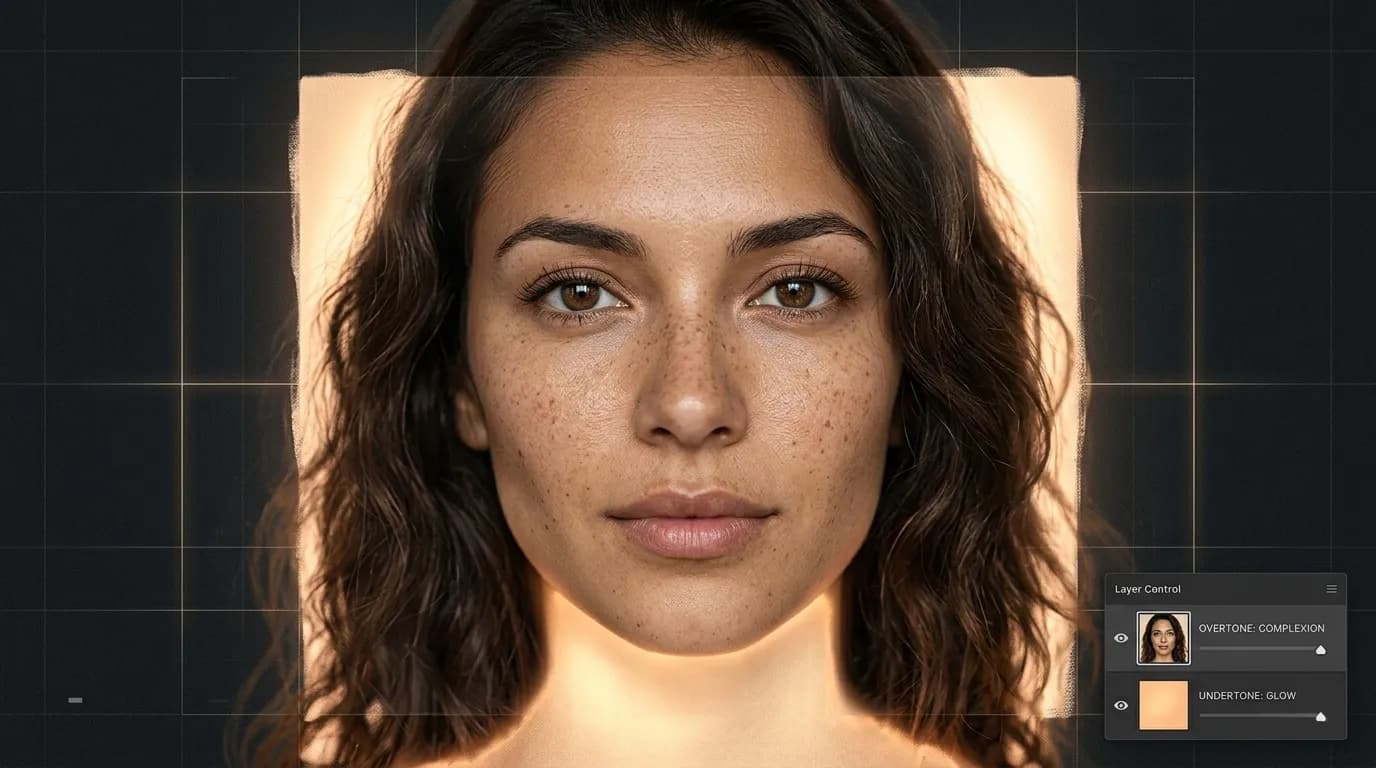
Skin Tone (Overtone)
The surface color you see in the mirror: fair, medium, deep, olive, reddish. It shifts with sun exposure, hormones, medical conditions, and age.
Undertone
The fixed warm or cool base beneath the surface. It never changes. It is the foundation of every color season.
When most people talk about skin tone, they mean how light or deep their complexion is. These are valid observations, but they describe only the surface—what professionals call the overtone. It is influenced by melanin, carotene, and how visible your blood vessels are beneath the skin. A fair complexion can appear more golden in summer and more washed out in winter. An olive complexion can deepen or lighten depending on lifestyle and environment. This is normal, and it is also why overtone alone is not a reliable guide to which colors will flatter you.
In fact, as mentioned earlier, overtone matters only in specific cases. Many of our clients worry that their olive overtone will affect their analysis. They are often misclassified online as cool or warm based on overtone alone. We always remind them that draping is what reveals undertone and contrast level accurately. Overtone should not complicate things for most people. It contributes only slightly to the overall analysis—far less than people believe.
Compared to overtone, skin depth does matter because it affects how much contrast you can carry. Deeper skin tends to support higher contrast combinations and richer colors. Fairer skin can be overwhelmed by very dark or highly saturated shades. However, depth is only one dimension and says nothing about whether your colors should be warm or cool.
From our experience working with women of color, we also notice patterns where contrast level is not extreme, but depth allows the skin and eyes to handle heavier, deeper colors. This means high contrast is not always required to fall into deep seasons like Deep Winter.
The Most Important Part
Beneath the overtone lies something that does not change: your undertone. It is the fixed warm or cool hue beneath your skin's surface. It is not affected by tanning, skincare, or age. Two people can have the same medium complexion and completely different undertones—one warm, one cool—and share almost no flattering colors.
From our experience analyzing clients, no one is a perfect example of a completely neutral undertone. Some people are neutral in the sense that they can tolerate colors from neighboring seasons—for example, Soft Summer often overlaps slightly with Soft Autumn—but they always lean more in one direction. Everyone is ultimately either more warm or more cool.
This is why descriptions like fair, medium, or olive are useful starting points, but not conclusions. Knowing you have olive skin tells you something about depth and surface appearance. It does not tell you whether peachy corals or cool pinks will make your complexion come alive. That answer lies in your undertone.
The Most Common Mistake
Someone with a reddish or pink complexion assumes they are cool. Someone with golden or olive skin assumes they are warm. Neither assumption is reliable, because both are based on overtone rather than undertone—and these often point in opposite directions.
Want to go deeper on undertone?
Our undertone guide covers the warm, cool, and neutral categories in full, why olive skin is often misread, and why the vein test has real limits.
Read the Undertone Guide →How Skin Tone Fits Into Color Analysis
In professional color analysis, skin is always the starting point because it reacts most visibly to color. During draping, the analyst observes the skin first. Does it look clear or grey? Does redness calm or intensify? Do shadows soften or deepen? Does the color dominate the person, or does the person dominate the color? Does the face appear more lifted, or do certain features overpower others?
These reactions are not about skin tone. They are about undertone. But observation always begins at the skin level, which is why understanding how your skin behaves is the foundation of the process.
The foundation: warm, cool, or neutral. Determined by how your skin reacts to color during draping, not by appearance alone.
Value
How light or deep your overall coloring is. This is where skin depth plays a direct role. A very fair complexion with a cool undertone may point to Light Summer, while a very deep complexion with a cool undertone may point to Dark Winter. Same undertone, completely different palettes.
Chroma
Whether your coloring is soft and muted or clear and vivid. Skin depth does not determine this. Some people can carry extremely vivid colors—Bright Springs and Bright Winters can wear intense shades like hot pink or fluorescent green and still appear more vibrant than the color itself. On the other hand, muted individuals look best in softened, greyed tones, like Soft Summers.
This is why two people with similar surface depth—such as a fair Light Spring and a fair Light Summer—can require completely different palettes. The depth is similar, but the undertone is not. One is warm, one is cool, and that single difference changes everything.
Why This Matters
Your skin is the largest surface near your face. It reflects more light than anything else. When a color works with your skin, everything looks clear, healthy, and balanced. When it does not, your complexion can look uneven, tired, or dull—and no styling can fully fix that.
When it works
- Skin looks clear and even
- Features appear more defined
- Attention stays on your face
When it doesn't
- Skin looks grey, red, or uneven
- You appear more tired
- The outfit stands out more than you
Skin tone is where observation starts. Undertone is where the analysis truly begins.
What Comes Next
If you understand your skin tone but have never explored your undertone, that is the most valuable next step. Undertone determines whether warm or cool colors bring clarity and balance to your complexion. It is the foundation of every color season.
Skin tone gives you context, but it is not enough to define your color season. Understanding your undertone is where everything becomes precise.
Read: How to Find Your Undertone →Frequently Asked Questions About Skin Tone
What is skin tone in color analysis? ↓
Is skin tone the same as undertone? ↓
Does skin tone determine your color season? ↓
Can people with the same skin tone have different color seasons? ↓
Can people of color do color analysis? ↓
Does skin tone determine your undertone? ↓
How do I know if I am warm or cool toned? ↓
Why do some colors make me look tired or dull? ↓
Why does my skin tone look different in summer and winter? ↓
Is olive skin a skin tone or an undertone? ↓
Where does skin tone fit in the color analysis process? ↓
Do I need to know my skin tone before starting color analysis? ↓
ColorisLab Team
Color Analysis ExpertsWe're a team of color analysis enthusiasts dedicated to helping people discover their best colors and build confidence through personalized color advice.