What Is Personal Color Analysis and Why Is It Useful? The Complete Beginner's Guide
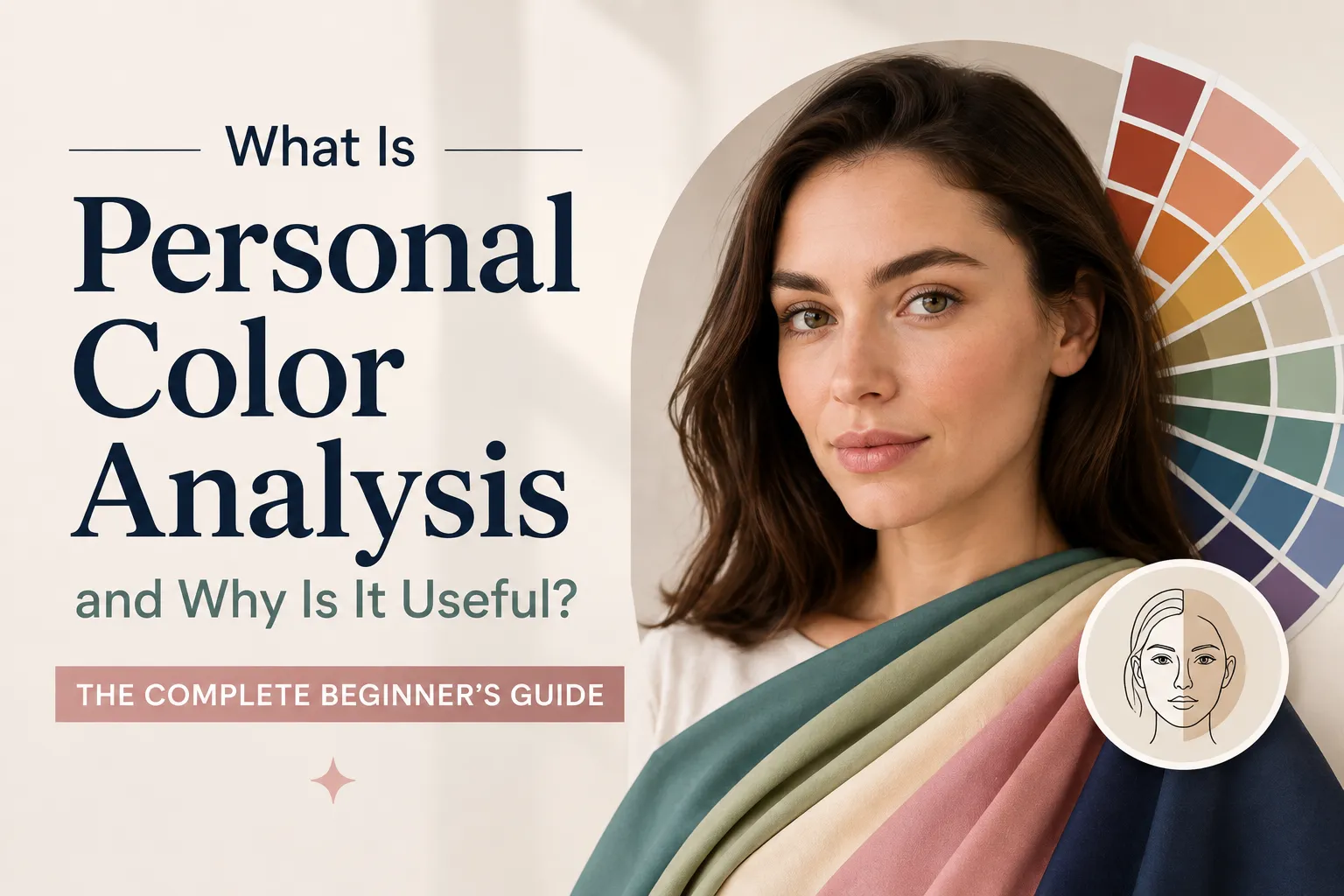
If you have recently heard the term personal color analysis, seasonal color analysis, or color palette analysis, you may be wondering whether it is just another beauty trend or whether it actually works.
Can wearing the right colors really make you look healthier, younger, more expensive, and more attractive without changing your face?
The short answer is yes. But not because of magic, fashion myths, or social media trends. Personal color analysis is based on the principles of color theory, visual perception, and the way the human brain processes harmony and contrast.
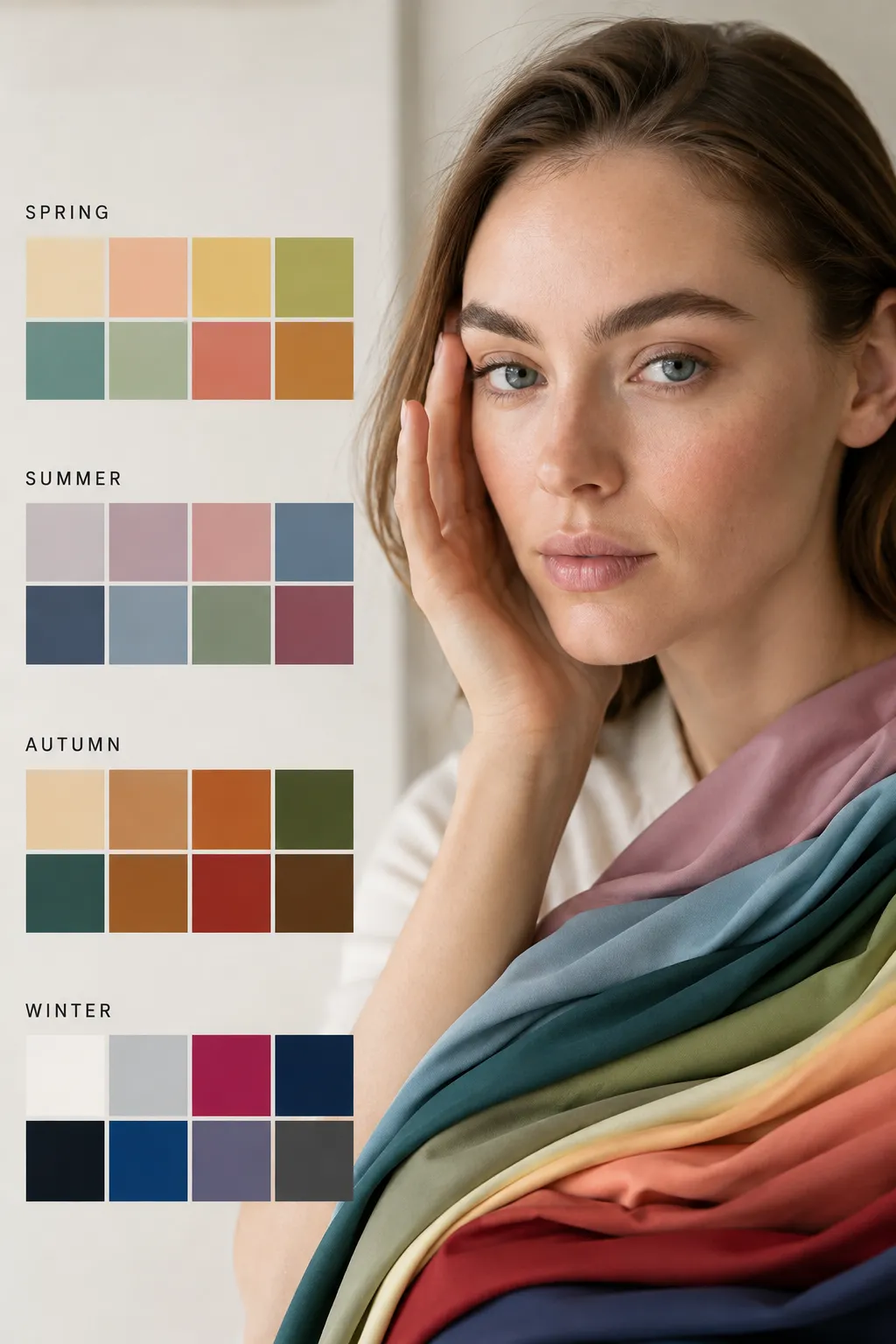
In this guide you will learn
What Is Personal Color Analysis?
Personal color analysis is the process of determining which colors create the greatest visual harmony with your natural features. Your natural coloring consists of several characteristics working together: your skin tone, your skin undertone, your eye color, your natural hair color, and the level of contrast between all of these features.
However, personal color analysis goes much further than simply looking at your skin undertone. The process measures how the colors surrounding your face influence your appearance.
Those surrounding colors can include
The goal is
Not to change who you are. The goal is to allow your natural beauty to become the focus. Color analysis studies how different colors affect your skin, your facial features, and ultimately how other people perceive you.
Is Color Analysis Just a Buzzword?
Not at all. Personal color analysis is a specialized branch of color theory, the same scientific principles that artists, photographers, designers, architects, filmmakers, and fashion professionals have relied on for decades.
Our brains naturally process color relationships. Exactly the same thing happens when colors are placed next to your face. For example, imagine someone with a cool undertone wearing a warm orange eyeshadow. While orange may contrast beautifully with blue eyes, it may also clash with the person's skin.
Wrong colors can
- Make the face look tired
- Emphasize redness
- Deepen under-eye circles
- Make scars more noticeable
- Create an unhealthy complexion
Right colors make people say
"You look amazing today." Not "Your sweater looks amazing." They compliment you, not your clothes. The clothing should never become the main character. You should.
The Science Behind Why Color Analysis Works
Human vision constantly compares colors with one another. Our brains never evaluate a color in complete isolation. Instead, every color influences the perception of the colors around it. This phenomenon is explained through principles of visual perception and simultaneous color contrast.
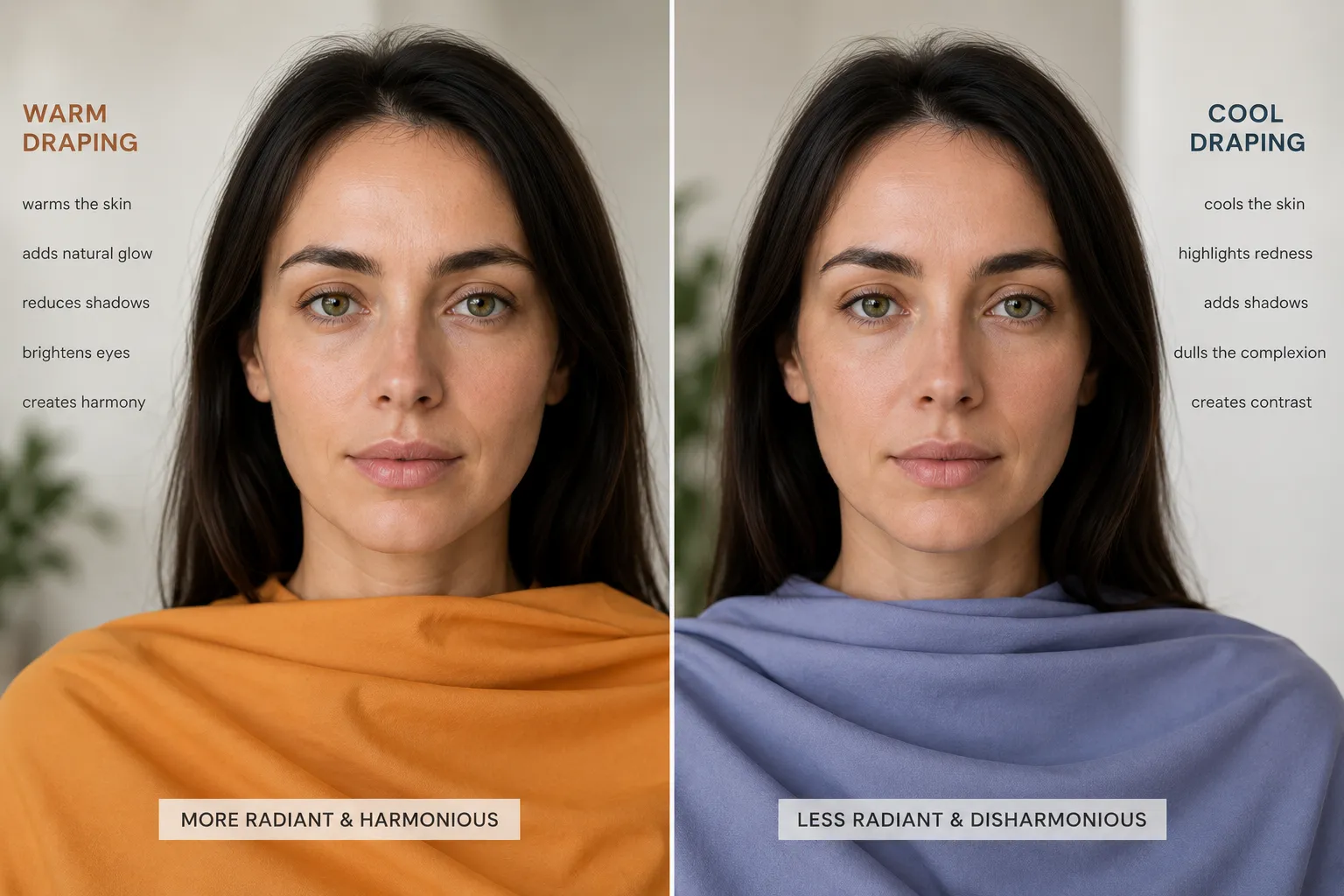
When color harmonizes with you
When color conflicts with you
Nothing about your face has actually changed. Only the surrounding color has. This is why professional draping is so powerful. Tiny color changes can create surprisingly large visual differences.
Do You Need Color Analysis to Look Good?
Absolutely not. You do not need personal color analysis to be beautiful. You do not need it to have style. You do not need it to dress well. Many stylish people have never had a color analysis.
However, if your goal is to consistently look your absolute best with less effort, personal color analysis is one of the most valuable tools available. It is often considered the foundation of a modern looksmaxxing strategy, because before changing hairstyles, buying expensive makeup, or replacing your wardrobe, it makes sense to understand which colors naturally support your appearance.
Color analysis does not create beauty. It reveals it.
That is the key difference. The goal is not transformation. The goal is enhancement of what is already there.
What Will I Receive From a Professional Color Analysis?
A professional analysis identifies your personal seasonal color palette. This is why the process is also called seasonal color analysis. Different analysts use different systems. Depending on the institution or methodology, you may encounter 4-season systems, 10-season systems, 12-season systems, 16-season systems, or even more advanced proprietary systems.
At ColorisLab, our methodology combines traditional seasonal color analysis with additional internal testing to improve precision.
What most professional analyses provide
What Does "Soft Summer" or "Bright Spring" Actually Mean?
Many beginners misunderstand seasonal names. They are not personality types. They are not medical diagnoses. They do not describe attractiveness. They do not define your character.
Names like Soft Summer, Bright Spring, or Deep Winter simply refer to groups of colors sharing similar visual properties. Think of them as carefully designed color libraries. Each palette typically contains dozens of harmonious colors that naturally complement specific combinations of skin, hair, and eyes.
How Are Color Palettes Created?
Professional palettes are built around measurable color characteristics. At ColorisLab, palettes are developed around these measurable principles while also drawing inspiration from established international systems that undergo internal evaluation before becoming part of our methodology.
Value
How light or dark a color is. This determines how much depth the colors in a palette carry and which color families work with the person's overall lightness or depth.
Whether a color leans warmer or cooler. This is the single most important parameter in color analysis and the foundation of every seasonal direction.
How soft, muted, or vibrant the color appears. Some people look best in clear, vivid tones. Others look best in softened, slightly greyed versions of the same hue.
Contrast
How strongly colors differ from one another, including their relationship with black and white. Contrast tolerance shapes which outfit combinations and color pairings work for each person.
Instead of assigning colors based on assumptions, we evaluate both the individual's features and the colors themselves. This dual-testing approach allows us to identify the palette that creates the highest degree of visual harmony.
What Can the Right Colors Actually Do?
Many people are surprised by the results. Some clients even describe their ideal palette as working like a premium foundation, except it comes from the clothing they wear rather than a cosmetic product.
The right colors can
- Make skin appear healthier
- Reduce the appearance of redness
- Soften fine lines
- Minimize visible imperfections
- Make eyes appear brighter
- Create effortless elegance
- Improve photographs without heavy editing
- Reduce the need for strong makeup
They can also help you
- Maximize your eyes without dramatic makeup
- Find your ideal hair color
- Choose shades that harmonize with your complexion
- Build a more cohesive wardrobe
- Reduce shopping mistakes
- Save time choosing outfits
Can I Do Personal Color Analysis Myself?
Yes, to a certain extent. At ColorisLab, we have developed a free Virtual Draping Studio that allows anyone to upload a photo and compare different seasonal palettes step by step. By observing how each color affects the face, users can begin identifying which palette creates the greatest harmony.
We have also created an AI-powered color analysis experience for people who want to explore a different approach and compare results. These tools are excellent starting points. However, they are not replacements for professional analysis.
Why professional color analysis is more accurate
The most reliable way to determine your best colors is through professional draping performed by trained analysts. Professional evaluation considers subtle interactions between undertone, contrast, value, chroma, and facial response that are difficult to judge alone. Lighting, camera quality, image processing, and screen calibration can all influence digital analysis. For that reason, professional color analysis remains the gold standard.
Once I Know My Palette, How Do I Use It?
This is where color analysis becomes truly practical. Shopping becomes dramatically easier. Instead of choosing between hundreds of colors, you immediately recognize which ones belong to your palette.
Shopping
Instead of choosing between hundreds of colors, you immediately recognize which ones belong to your palette. This saves time, money, decision fatigue, and wardrobe mistakes.
Makeup
Finding your ideal foundation based on your true undertone becomes realistic rather than frustrating. Choosing flattering blush, bronzer, lipstick, and eyeshadow also becomes much easier.
Wardrobe
Your wardrobe gradually becomes more cohesive. More outfits naturally work together. You buy fewer clothes that remain unworn.
Authenticity Is the Ultimate Luxury
In a world full of trends and endless comparisons, the real luxury is not looking like someone else. It is looking like the very best version of yourself.
That is the real purpose of personal color analysis. Not transformation. Enhancement.
Ready to explore your palette?
Start with our free Virtual Draping Studio. Upload your photo and compare seasonal palettes side by side to see how each color interacts with your natural features.
Try the Virtual Draping Studio →Frequently Asked Questions
What is personal color analysis? ↓
Is seasonal color analysis scientifically based? ↓
Is personal color analysis worth it? ↓
Can I do color analysis online? ↓
What is a seasonal color palette? ↓
How many seasonal color systems exist? ↓
Does my season describe my personality? ↓
Can personal color analysis tell me my best hair color? ↓
Will wearing the right colors make me look younger? ↓
Is ColorisLab's Virtual Draping free? ↓
How long do the results last? ↓
ColorisLab Team
Color Analysis ExpertsWe're a team of color analysis enthusiasts dedicated to helping people discover their best colors and build confidence through personalized color advice.