Dakota Johnson Color Analysis: Why Dakota Johnson Is a Soft Summer, Not an Autumn
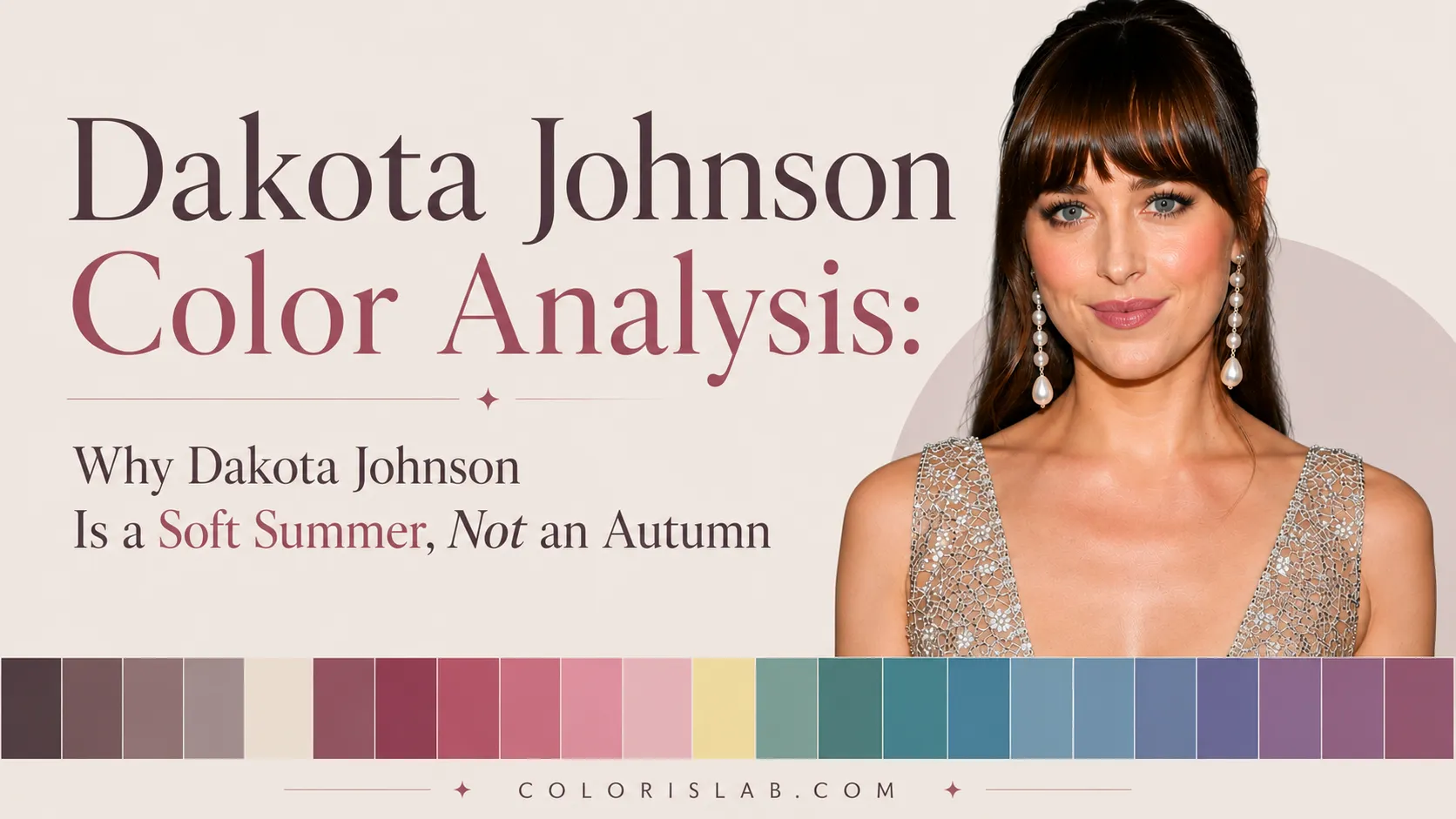
Dakota Johnson is one of the clearest modern examples of how softness can completely redirect a person's season in color analysis.
At first glance, many people immediately place her somewhere inside Autumn because of her brunette hair, softer earthy styling, and ability to wear bohemian fashion aesthetics. Others move her toward Winter because she occasionally appears striking in darker editorial styling.
But once we stop focusing on styling identity and begin analyzing actual harmony through draping principles, the answer becomes much more precise. Dakota Johnson does not respond best to warmth, excessive darkness, or bright saturation. Her features consistently become calmer, smoother, and more balanced inside cool muted tones with softened contrast. That is exactly why Dakota Johnson is a Soft Summer, also called Muted Summer in some systems.
We have noticed that celebrities are very often assigned incorrect seasons online. Usually this happens because people focus too heavily on hair color, styling aesthetics, fake tan, makeup, or personal preference instead of repeated harmony patterns across multiple draping comparisons.
That is exactly why we created this Celebrities and Influencers color analysis category. The goal is not to criticize celebrities, but to help people understand how professional color analysis actually works through real visual examples. If you personally do not believe in color analysis, that is completely okay. We are not fashion police, only an educational platform for people who enjoy studying visual harmony, undertones, contrast, and color relationships. So take this analysis with a light heart and enjoy the process.
Our Method
At ColorisLab, we always use double testing before assigning a season. The first method is our internally developed parameter system, where we analyze undertone, value, contrast, and chroma. The second method is virtual draping performed through our professional draping workflow and repeated comparison rounds. Unlike random online quizzes, we do not rely on one image, lighting tricks, or personal styling preference. We require harmony patterns to repeat consistently across multiple comparisons before reaching a conclusion.
Step One: Undertone
Every professional color analysis begins with undertone. For Dakota Johnson, one of the clearest tests appears when we compare cooler silver-toned harmony against warmer golden warmth.
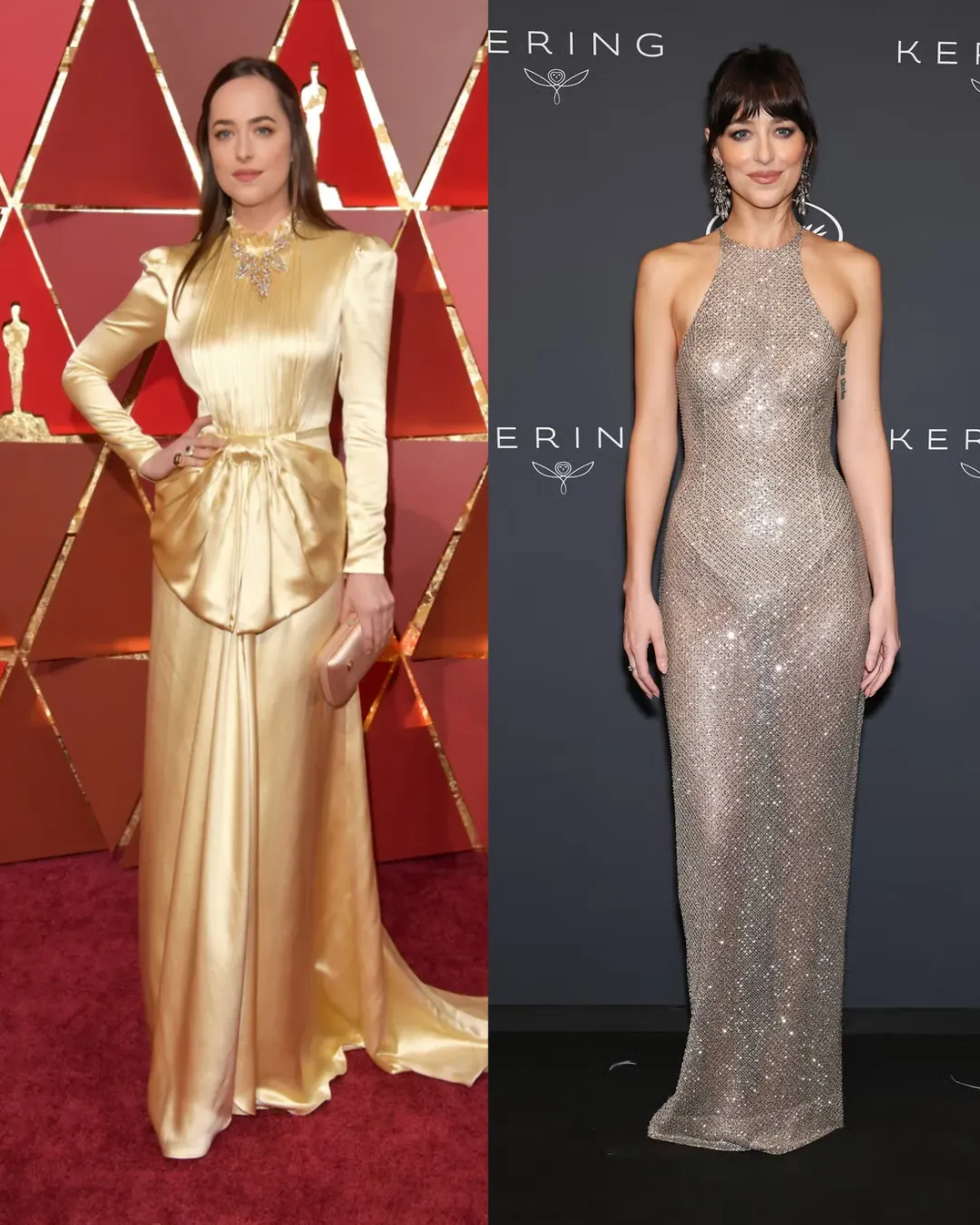
On the left, the warm gold styling immediately begins pulling attention away from Dakota's face. The warmth becomes visually dominant before her features do. Her skin starts appearing slightly heavier and more yellowed, while the overall image loses softness. On the right, the cooler silver-toned harmony immediately feels calmer and more connected to her natural coloring.
Warm gold styling
Her skin appears slightly heavier and more yellowed. The warmth becomes the focal point and pulls attention away from her features. The image loses its natural softness.
Cool silver-toned harmony
Her skin appears smoother, her eyes remain the focal point, the face looks softer and more refined, and the outfit supports rather than dominates.
This is one of the clearest signs of a cool direction. However, Dakota is not fully cool in the icy Winter sense. Her coloring still contains softness and neutrality, which moves her toward neutral-cool Summer rather than sharp cool Winter harmony. That distinction is extremely important because many Soft Summers get mistyped as Winters simply because they have darker hair. Hair alone does not determine season, especially because we often do not know a person’s true natural hair color due to dyeing, highlights, aging, greying, styling, or lighting. Dakota Johnson is actually a natural blonde, despite the fact that darker brunette hair suits her extremely well. That happens because Soft Summers can still handle medium depth, particularly when the color remains muted and softly blended rather than overly harsh or high contrast.
Step Two: Bright vs Soft
The next parameter we test is chroma. This is where Dakota Johnson becomes significantly easier to analyze.
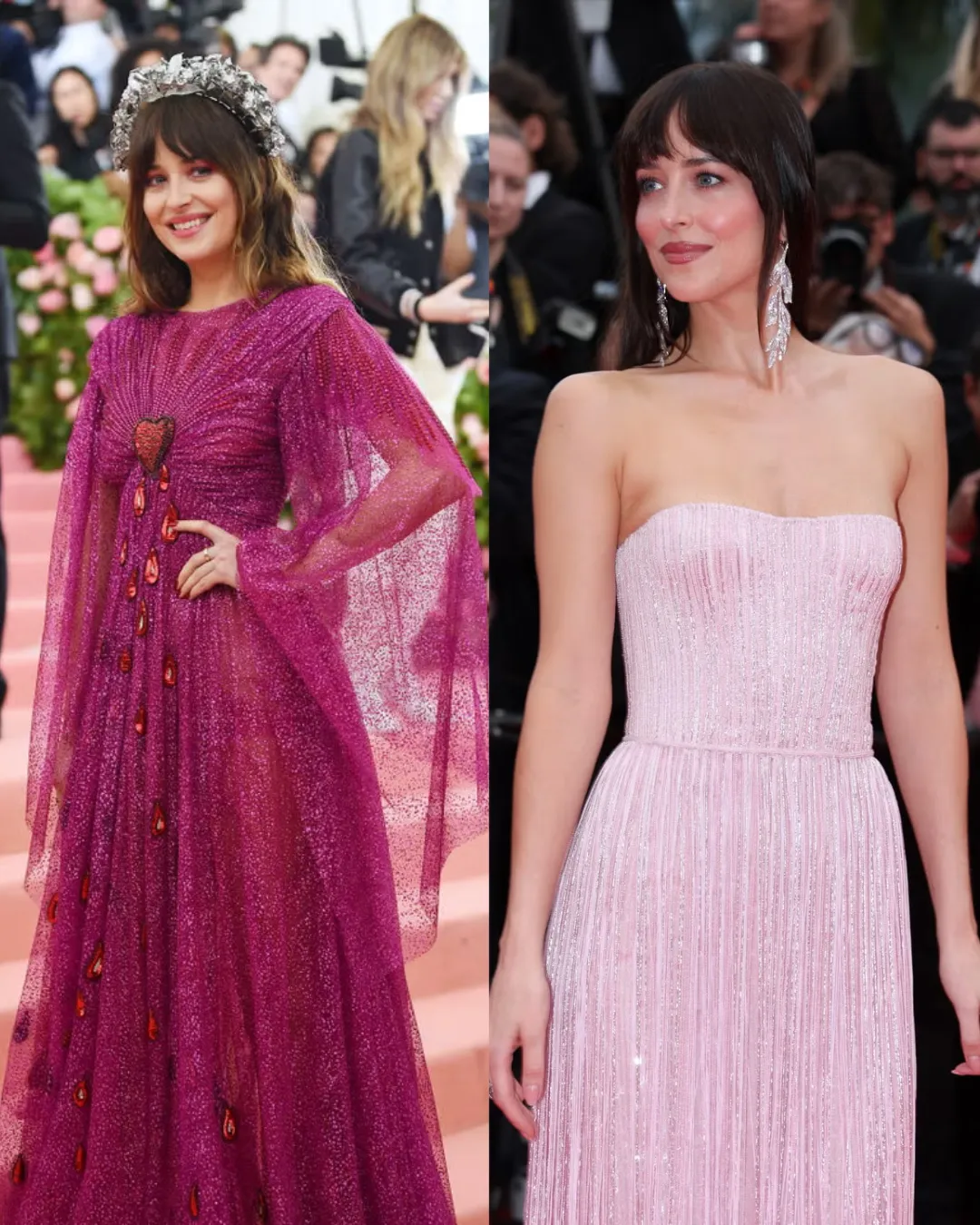
The brighter saturated pink immediately creates too much visual intensity relative to her natural softness. Instead of enhancing her features, the color starts competing with her face. This is one of the biggest indicators that someone does not belong to Bright Spring or Bright Winter palettes.
What Soft Summer chroma actually looks like
Soft Summer individuals usually look their best in colors that feel dusty, smoky, muted, softened, and slightly greyed down. Dakota responds extremely well to this type of chroma. The softness harmonizes with her natural coloring instead of overpowering it. On the softer muted pink side, her skin appears calmer, her eyes become more noticeable, her natural contrast feels balanced, and the overall image becomes elegant and effortless.
At this point we can already confidently eliminate bright palettes. The direction is soft, cool, and muted.
Step Three: Light vs Dark
The next parameter is value and contrast. Dakota Johnson has light to medium value with low to medium contrast. This is extremely important because people often mistake her dark brunette hair for high contrast.
Professional contrast is not about hair alone
In professional color analysis, we do not measure contrast through hair alone. We observe the relationship between skin, eyes, hair, facial separation, and overall visual intensity. Dakota's overall contrast remains relatively soft, which is why deep and dramatically dark combinations consistently overpower her rather than supporting her.
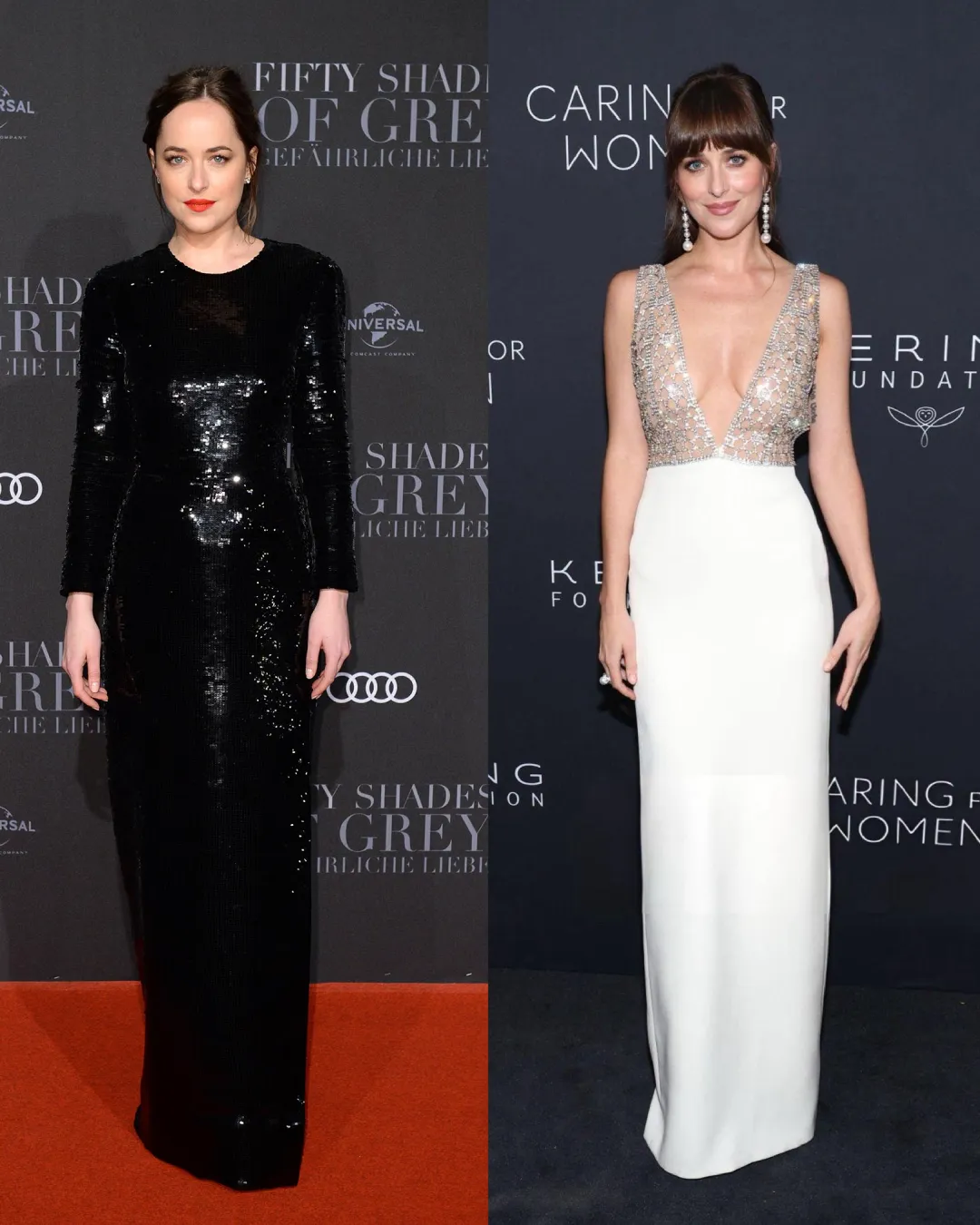
In the darker dramatic styling, especially black, the outfit becomes visually heavier than her features. The darkness slightly overwhelms her natural delicacy and creates a sharper effect than her coloring naturally supports. Meanwhile, the lighter muted cool tones create far more balance. Her features appear softer, cleaner, more refined, and naturally connected.
This immediately helps eliminate Deep Winter and Deep Autumn. She simply does not require enough darkness for deep palettes. Instead, her harmony consistently lives inside softer medium-value Summer ranges.
Step Four: Soft Summer vs Soft Autumn
At this stage, we already know Dakota belongs somewhere inside the softer families. The final comparison becomes: Soft Autumn or Soft Summer?
These two seasons are sister seasons, meaning they share muted chroma, softer harmony, and lower contrast. The major difference is temperature. Soft Autumn is neutral-warm. Soft Summer is neutral-cool.
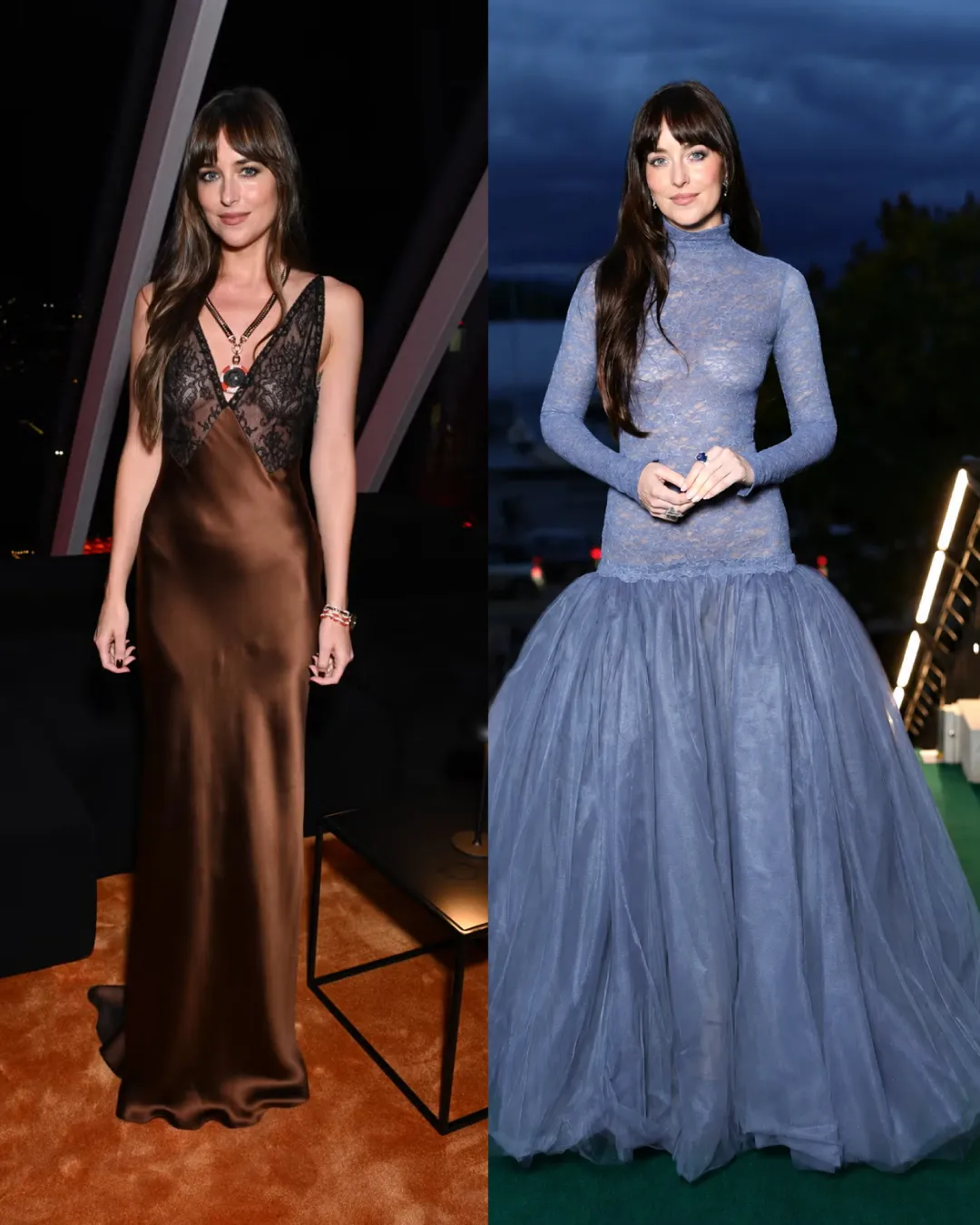
The muted cool Summer tones immediately create more harmony with Dakota's natural coloring. Her skin appears cleaner, her eyes become softer, and the entire image feels calmer and more connected.
The warmer earthy softness on the Autumn side is not terrible, which is exactly why so many people confuse her with Autumn online. But the warmth still adds slight heaviness that disconnects from her natural undertone.
The most common Soft Summer mistype
People assume that muted automatically means Autumn. But softness alone is not enough. Temperature still matters. And Dakota consistently harmonizes better with cool muted Summer tones than with warm muted Autumn shades.
Virtual Draping and Multi-Round Testing
One important thing we want to highlight is that professional color analysis is never based on a single comparison. Inside our ColorisLab Draping Studio, multiple rounds are performed across different parameters before a final conclusion is reached.
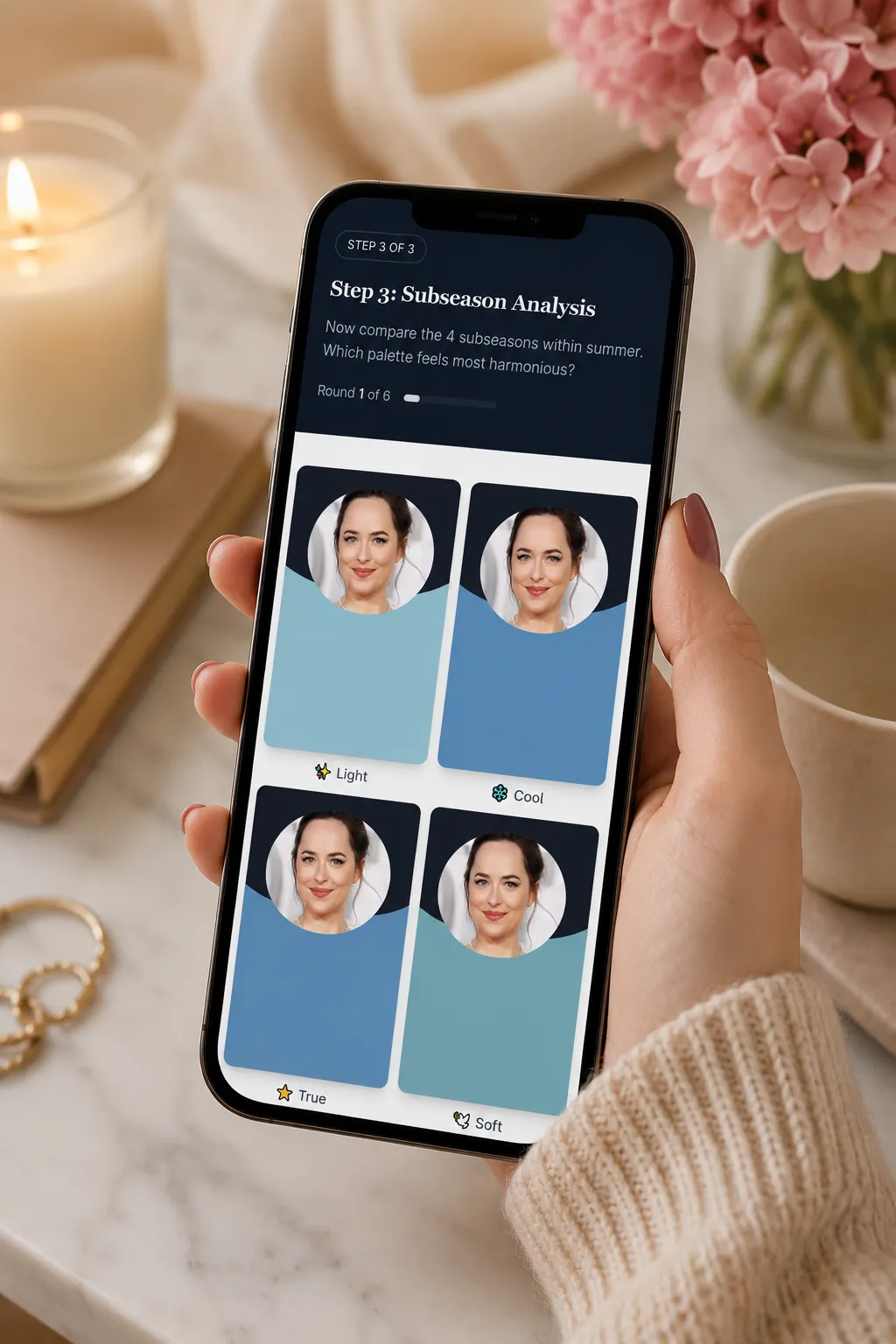
In the demonstration above, multiple Summer subseasons are compared through virtual draping. The actual professional process includes repeated rounds focused on undertone, chroma, contrast, value, and subseason harmony.
The goal is not to choose the prettiest color. The goal is to observe which palette consistently creates the strongest harmony with the person's natural features across multiple controlled comparisons. That repeated consistency is exactly what leads to accurate results.
The Conclusion: Soft Summer
After analyzing undertone, chroma, value, contrast, and repeated draping harmony, the final conclusion becomes extremely clear.
Dakota Johnson's confirmed parameters
She is not Winter because her features do not tolerate extreme contrast, icy sharpness, or deep dramatic darkness strongly enough. She is not Soft Autumn because her harmony consistently improves in cooler muted tones rather than warmer earthy softness. Her best colors remain soft, smoky, elegant, and slightly desaturated.
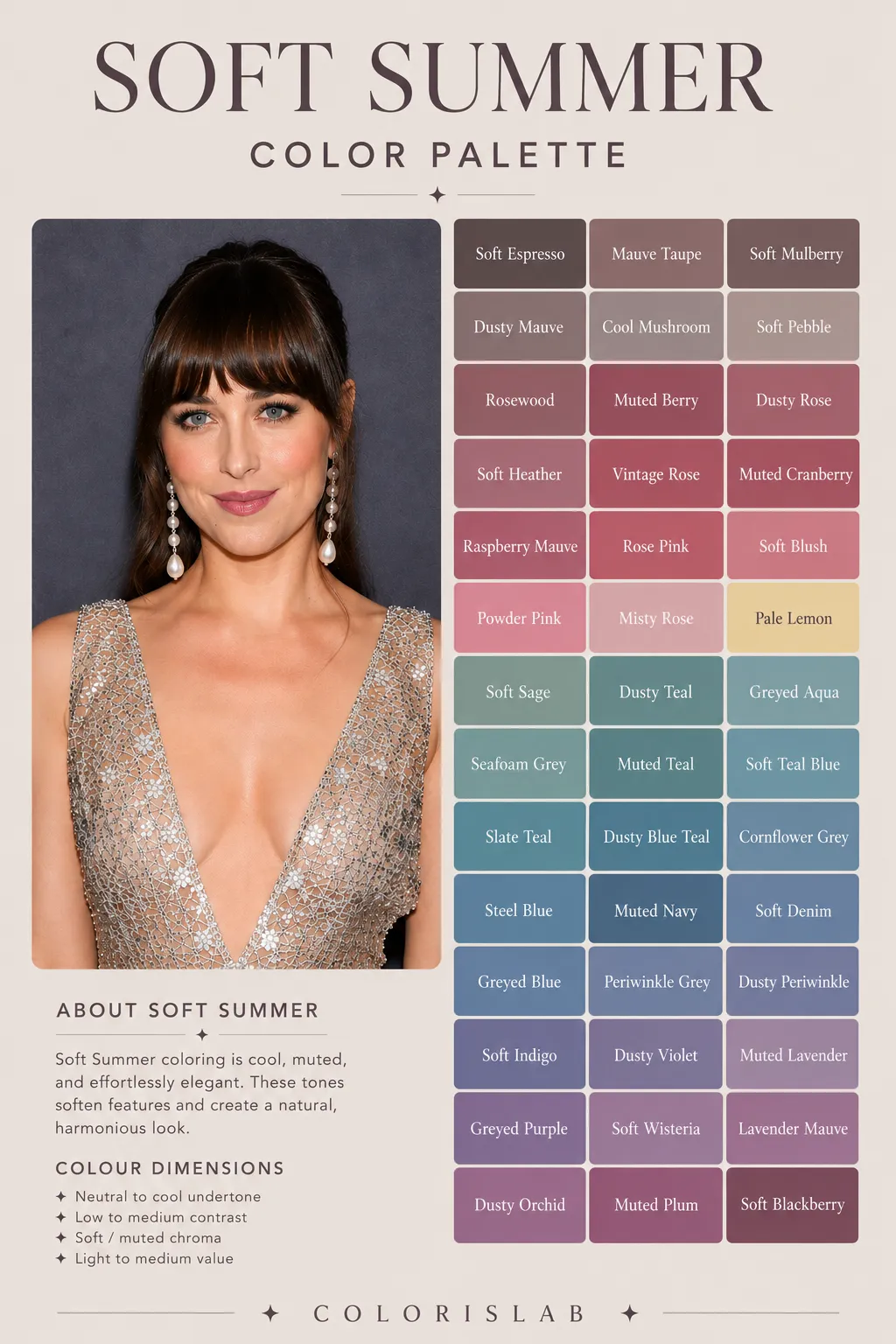
Her best colors
- Smoky blue
- Dusty rose
- Muted mauve
- Soft lavender
- Cool taupe
- Smoky navy
- Greyed denim blue
- Soft plum
- Muted berry pink
- Antique silver
- Soft monochromatic combinations
What overpowers her
- Neon colors
- Bright saturated pinks
- Sharp black-and-white contrast
- Heavy darkness
- Strong orange warmth
- Intense Autumn earth tones
- Bright Winter palettes
- Extremely vivid Spring colors
Want to be analyzed the same way?
If you want to discover your own season, our professional analysts use the same double-method approach shown throughout this article: internal parameter analysis, virtual draping comparisons, and multi-round subseason testing. Our goal is simple: to make sure your result matches your actual natural harmony.
Order Your Professional Analysis →Frequently Asked Questions
What is Dakota Johnson's color season? ↓
Is Dakota Johnson warm or cool toned? ↓
Is Dakota Johnson a Soft Autumn? ↓
Why is Dakota Johnson not a Winter? ↓
What is the difference between Soft Summer and Soft Autumn? ↓
What are Dakota Johnson's best colors? ↓
Can Soft Summers wear black? ↓
Why do people mistype Dakota Johnson? ↓
What jewelry suits Dakota Johnson best? ↓
Can Soft Summers wear warm colors? ↓
ColorisLab Team
Color Analysis ExpertsWe're a team of color analysis enthusiasts dedicated to helping people discover their best colors and build confidence through personalized color advice.